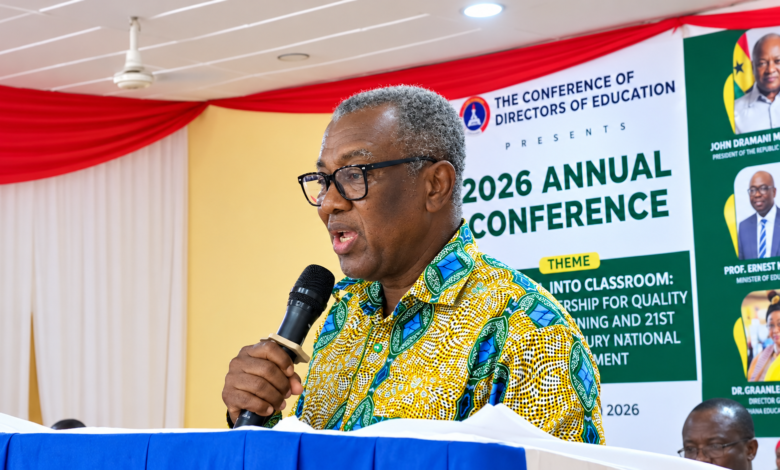
Professor David Millar, President of the Millar Institute for Transdisciplinary and Development Studies has proposed renaming Ghana’s Category A, B and C schools to address the stigma and unhealthy competition associated with the school placement system.
Speaking at the opening ceremony of the 33rd Annual National Conference of Directors of Education in the Upper East Region, Professor Millar questioned the rationale behind the existing categorisation, arguing that the labels influence how parents and students perceive schools.
“Why do we have Category A, Category B and Category C schools?” he asked, suggesting that alternative labels could help change public perceptions without necessarily abolishing the three-category system.
He cited X, Y and Z as examples of possible alternatives, explaining that the current arrangement reinforces the perception that Category A schools are superior and encourages parents to prioritise them over others.
Professor Millar also called for improved support and performance-related allowances for teachers, particularly those serving in rural and deprived communities.
“I don’t believe in salary increments. I believe in performance-related allowances increment,” he said, arguing that remuneration should be linked to delivery in the field and supported by the necessary resources.
He further urged the Ghana Education Service to strengthen technical and vocational education, science, technology and ICT-related teaching, while preparing schools for the growing influence of artificial intelligence.
Delivering a speech on behalf of GES Director-General Professor Ernest Kofi Davis, a representative emphasised the importance of district-level leadership in translating education policies into effective classroom teaching.
“The best supervisor is not merely a critic who passes by, but is a coach who works alongside,” the representative said, urging education directors to strengthen school supervision and support teachers to improve learning outcomes.
The representative also stressed the need to ensure that learners acquire foundational skills in reading, writing and numeracy, alongside critical thinking, communication, collaboration and creativity.
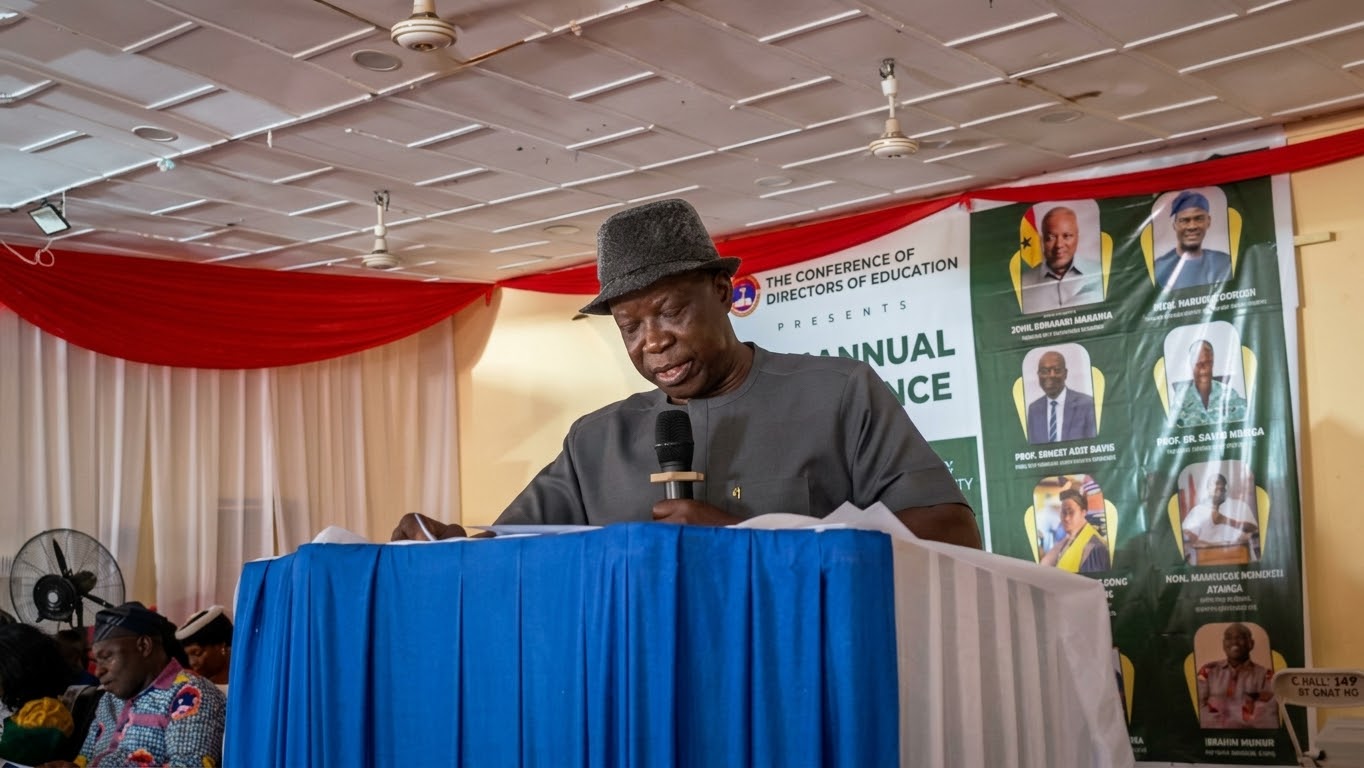
The Upper East Regional Minister, Donatus Akamugri Atanga, called for decisive action against teacher absenteeism, student indiscipline, alcohol and substance abuse, and declining moral standards in schools.
“We cannot talk about quality learning outcomes while ignoring teacher absenteeism, students’ indiscipline, alcoholism and substance abuse among both students and teachers,” he said.
Atanga urged education directors to enforce professional standards while encouraging parents, traditional leaders and communities to help restore discipline and positive values in schools.
He also called for equitable teacher deployment, adequate learning materials and stronger collaboration among education authorities and other stakeholders to improve access to quality education, particularly for disadvantaged learners.
The conference brought together education directors, teachers’ union representatives and other stakeholders to discuss district leadership, classroom implementation and strategies for improving learning outcomes across Ghana.
The opening ceremony held on Tuesday October 20, at the GNAT Hall in Bolgatanga, is under the theme: “From Policy to Classroom: District Leadership for Quality Outcomes and 21st Century Skills for National Development.”
Mike 105.3 FM I Navrongo | Samuel Atule Abiiro