NCCE urges women in Kassena-Nankana to report corruption, defend their rights
NCCE calls on women in Kassena-Nankana to speak out against corruption, report wrongdoing and demand justice.
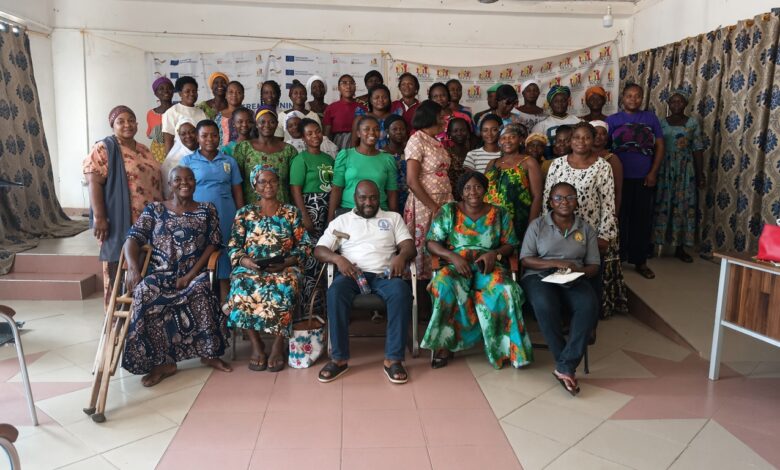
The National Commission for Civic Education (NCCE) in the Kassena-Nankana Municipality has urged women in the area to report corruption and other forms of wrongdoing, stressing that active citizen participation is essential to promoting accountability and the rule of law.
The call was made on Wednesday October 21, during a follow-up civic engagement held at the Kassena-Nankana Municipal Assembly Hall to assess the impact of an earlier sensitisation programme and strengthen women’s confidence to challenge corruption.
The event brought together about 50 women from various groups, including market women, community leaders, hairdressers and dressmakers, under the Civic Engagements on the Rule of Law and the Fight Against Corruption project.
Felicia Ajongbah, Civic Educator and Municipal Director of the NCCE said the engagement was intended to help participants reflect on their experiences since the initial programme in March, identify challenges and learn to use available legal channels to report wrongdoing.
She said the programme had begun to produce positive results, with some women gaining the confidence to question decisions and challenge practices they previously accepted out of fear or a lack of knowledge.
“Most of the women actually shared their experience with us,” she said, explaining that the discussions revealed instances in which participants had approached public institutions to seek clarification or demand their rights.
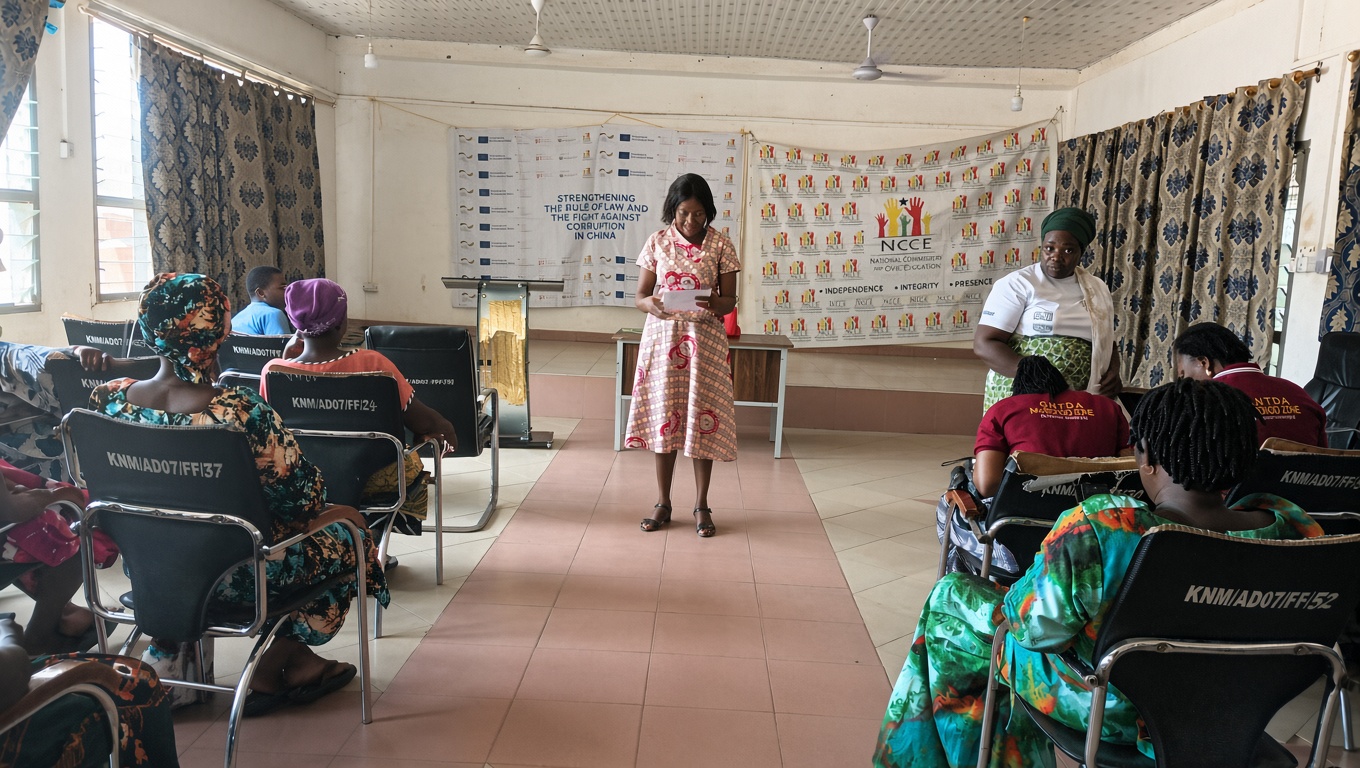
Ajongbah cited the case of a participant who questioned the omission of her mother’s name from a registration process after gaining the confidence to approach the relevant office.
She also recounted experiences involving alleged improper payments connected to school admission, physical abuse within a family and irregularities in National Service postings, saying the programme had encouraged affected women to seek redress through the appropriate channels.
“These are all success stories,” she said, adding that sustained civic education was helping women become more confident in standing up for their rights.
The Kassena-Nankana Municipal Director for the Commission on Human Rights and Administrative Justice (CHRAJ), Abdul Gafaru urged participants not to remain silent when they witnessed corruption, emphasising that the problem was not limited to high-profile public officials but could also occur in everyday interactions within communities, markets, schools and public institutions.
“Meanwhile, the dangerous one is our day-to-day interactions in the market,” he said, urging participants to pay attention to seemingly minor acts of corruption that could undermine public accountability.
Gafaru encouraged citizens to report suspected wrongdoing to CHRAJ, the police and other appropriate authorities, adding that community leaders and trusted intermediaries could also help direct complaints to the relevant institutions.
He stressed that citizens should not allow fear of victimisation to prevent them from reporting suspected corruption.
“Your reporting is your power,” he said. “That is the only weapon you can use to change society as a citizen.”
On whistleblower protection, Gafaru explained that the law provides avenues for people to report wrongdoing confidentially and urged participants to understand the available procedures before making complaints.
He said the relevant authorities had a responsibility to protect whistleblowers under the applicable legal framework and investigate information received.
He also highlighted alleged corruption in the distribution of school feeding supplies and demands for sexual favours in exchange for educational opportunities as examples of wrongdoing that should be reported rather than concealed.
“Everybody is under the law,” he said, emphasising that no individual should be considered above the law because of social standing, economic status or position.
Gafaru further urged parents to maintain open communication with their children and take allegations of sexual abuse seriously, encouraging them to seek assistance from the appropriate authorities instead of treating such incidents as private family matters.
The engagement forms part of the Civic Engagements on the Rule of Law and the Fight Against Corruption project, an initiative under the Participation, Accountability and Integrity for Resilient Democracy (PAIReD) programme.
The programme is commissioned by the German Federal Ministry for Economic Cooperation and Development (BMZ), co-funded by the European Union and the Swiss State Secretariat for Economic Affairs (SECO), and implemented by the German development agency GIZ in cooperation with Ghana’s Ministry of Finance.
The initiative seeks to promote sustained civic engagement, particularly among women, on anti-corruption, accountability and the rule of law.
Participants were encouraged to apply the knowledge gained in their homes, workplaces, associations and communities and to help build a culture of integrity, transparency and accountability.
Mike 105.3 FM I Navrongo | Samuel Atule Abiiro