Illegal sand winning has plunged the Upper East Region into a sorrowful state, especially in the Bongo District, The Talensi Districts and The Kassena Nankana West District in the region. In Bongo District, communities like Balungo and Lungo had all been heavily affected.
Similarly, in the Talensi District, communityy like Pwalugu and its surroundings have become hotspots for sand winning activities, in kassena Nankana West District, community like Sirigu is affected by illegal sand winning activities, and many other districts in the region.
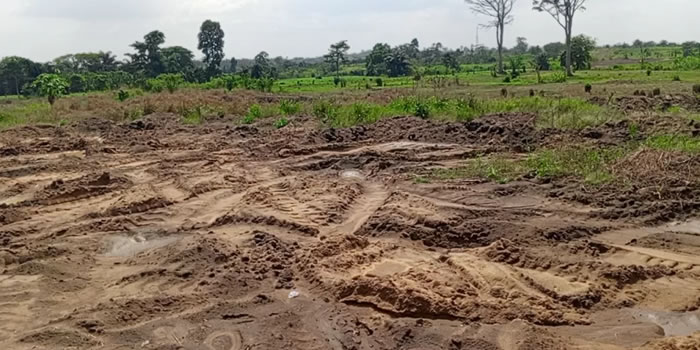
These illegal operations have consumed vast stretches of farmland, leaving behind deep pits and degraded landscapes. If urgent action is not taken, the region could face a severe agricultural crisis in the near future. Sand winning removes the fertile topsoil, making it impossible for crops to grow and gradually eating into people’s farmlands.
Moreover, the activity exposes the soil surface to wind and rain, which leads to serious erosion. Once the natural vegetation is stripped away, the rainwater washes away the remaining topsoil, creating gullies and rendering the land unproductive.
My observation and interactions with the farmers in those areas, especially Bongo, reveal that these illegal operations are most rampant during the dry season, with between 20 and 30 truckloads of sand taken each day from Monday to Saturday. Each truckload of sand is sold for about ₵3,000, while the loaders charge between ₵150 and ₵200 per truck.
According to Achindiba Dickson, the Minerals Commission Manager in Bolgatanga, confirmed that, no individual or company currently holds a valid license to undertake sand-winning activities in the region. He confirmed that only one applicant from Pwalugu has applied for a permit, but his documents are still under processing. So, he has not been given a permit to sand wined.
This situation not only harms the environment but also deprives district assemblies of huge revenues. If these operations were legalized, assemblies could collect permit fees, environmental taxes, and royalties, which could support local development projects such as roads, schools, and health facilities. Instead, these illegal operators pocket the proceeds, while communities suffer the environmental consequences.
The practice has been ongoing for more than two decades, and unless immediate steps are taken by the authorities — including the Environmental Protection Agency (EPA), Minerals Commission, and District Assemblies — the region risks losing both its fertile lands and its economic potential.
It is time for a coordinated and community-driven effort to stop this environmental destruction and protect the livelihoods of the people of the Upper East Region.
THE EFFECT OF THE ACTIVITIES
- When sand is removed continuously from riverbanks, farmlands, or valleys, the surrounding soil becomes loose and collapses into the pits. Over time, the area of the pit expands, gradually consuming nearby lands. Farmers lose part or all of their plots to these expanding pits.
- The removal of vegetation and topsoil leaves the land bare. During rainfall, there’s nothing to hold the soil together, so it washes away, forming deep gullies and eroded surfaces — a process known as soil erosion.
- Under Ghana’s law, legal sand winning requires permits and the payment of royalties or fees to the District Assemblies and the Minerals Commission. Since illegal operators do not register or pay these fees, assemblies lose the money that could have been used for public projects such as roads, schools, and clinics.
By: Emmanuel Atindah (A Native of Upper East) atindahemmanuel@gmail.com 0546045196 / 0205403141
EDITOR’S NOTE: The views, opinions, and statements expressed in articles, commentaries, opinions or other contributions published by guest writers, opinionists, or contributors are solely those of the authors and do not necessarily reflect the official position, policy, or editorial stance of MIKE FM.