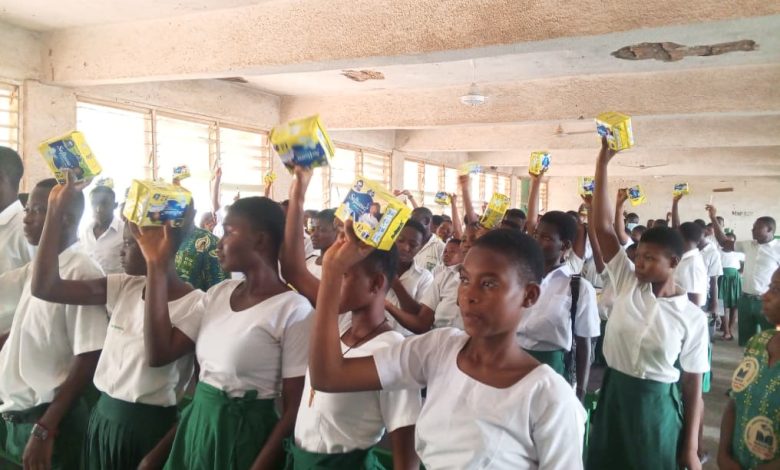
The Upper East Regional branch of the National Association of Graduate Teachers (NAGRAT) has intensified efforts to promote menstrual hygiene education as part of measures to reduce stigma, discrimination, and school absenteeism among female students.
The initiative formed part of activities marking World Menstrual Hygiene Day, observed annually in May. The programme brought together both male and female students to foster awareness and encourage open conversations about menstrual health.
Speaking at the event, the Upper East Regional Gender Desk Coordinator of NAGRAT, Scholastika Achisa, said the campaign was designed to educate students on proper menstrual hygiene practices while addressing misconceptions and cultural taboos surrounding menstruation.
According to her, many girls continue to experience embarrassment, discrimination, and social exclusion during their menstrual periods due to persistent myths and inadequate understanding among their peers, particularly boys.
Achisa emphasized that involving boys in menstrual hygiene education is critical to eliminating stigma and creating a supportive environment for girls. She noted that menstruation is a natural biological process and should not be a subject of ridicule or shame.
“Menstruation is a normal part of life, and it is important that both boys and girls understand it. Educating boys helps foster respect, empathy, and support for their female colleagues,” she said.
She further disclosed that some girls continue to miss classes during their menstrual periods due to fear of embarrassment, inadequate menstrual hygiene management, or lack of access to sanitary products.
According to her, NAGRAT’s advocacy seeks to empower girls with the knowledge and confidence needed to manage their menstrual health effectively and remain in school throughout the academic year.
Achisa also called on parents and guardians to take a more active role in educating their daughters on menstrual health and hygiene. She encouraged families to engage in open discussions on menstruation and ensure that girls have access to sanitary pads and other essential menstrual products.
She added that schools have washroom facilities and access to health professionals who can provide guidance and support to students experiencing menstrual health challenges.
NAGRAT reaffirmed its commitment to expanding the campaign to more schools across the Upper East Region to promote menstrual hygiene awareness, break harmful stereotypes, and create a safe and inclusive learning environment for all students.
Mike 105.3FM I Navrongo | Prosper Adankai