UTAS students develop AI-powered WhatsApp chatbot to address adolescent reproductive health challenges
The WhatsApp-based platform aims to give adolescents private, accessible and reliable reproductive health information while connecting high-risk cases to professional human support.
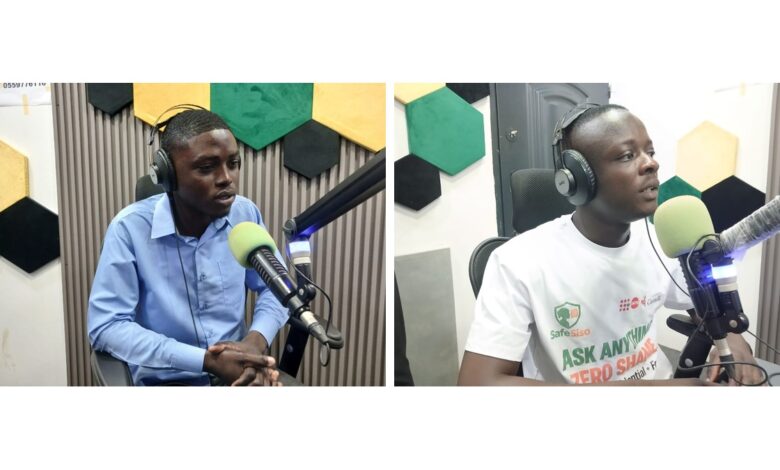
Students of the University of Technology and Applied Sciences (UTAS) in Navrongo have developed an AI-powered WhatsApp chatbot to provide adolescents with confidential and accessible sexual and reproductive health information.
The chatbot, known as Safesiso, is designed to provide young people with a private platform where they can seek information on sensitive health issues without fear of embarrassment, stigma or judgment.
Speaking on the Big Mike Breakfast Show on Wednesday, September 24, Abdul Aziz Alhassan, a Level 400 Computer Science student and founder of Safesiso, said the chatbot provides immediate and age-appropriate information on sexual and reproductive health.
He said the initiative targets adolescents between the ages of 10 and 18 and is designed to help address misconceptions and enable young people to make informed decisions about their health.
According to him, the platform is adolescent-friendly and easy to use, allowing users to ask questions relating to their reproductive health and receive responses through WhatsApp.
Abdul Aziz said social stigma and cultural taboos in some households often prevent young people from asking questions about their bodies and reproductive health, making it necessary to create alternative channels through which they can access reliable information privately.
Dominic Asorbuno, a Level 300 Information Technology student and Programmes Manager for the initiative, cited data on adolescent pregnancies as an indication of the need for innovative approaches to addressing reproductive health challenges among young people.
He said 53,415 adolescent pregnancies were recorded between January and July 2026, with 1,501 cases involving girls between the ages of 10 and 14.
To help address the challenge, the students developed the chatbot on WhatsApp, a platform widely used by young people.
They said the decision to use WhatsApp was intended to make the service simple, familiar and convenient for adolescents to access.
Users can access the service by saving the dedicated contact number 0559883060 on their mobile phones and sending messages to the chatbot in the same way they would communicate with a regular WhatsApp contact.
The developers said the system also features a safety mechanism known as a red-flag system, which identifies conversations that may require assistance beyond the information that can be provided by the chatbot.
When a red flag is triggered, the case is referred to verified safe spaces and professional human support through partner networks.
According to the developers, the referral mechanism is intended to ensure that users who require further assistance can receive appropriate human support rather than relying solely on an automated system.
Before the official launch, the team conducted pilot testing with groups of young people to assess the platform’s usability and effectiveness.
The developers said the pilot exercise showed that participants were willing to use the platform to ask questions about sensitive issues they might otherwise be uncomfortable discussing openly.
The exercise also enabled the team to observe how young people interacted with the chatbot and identify areas for improvement ahead of its official launch.
Mike 105.3FM | Navrongo | Claudius Yarrow