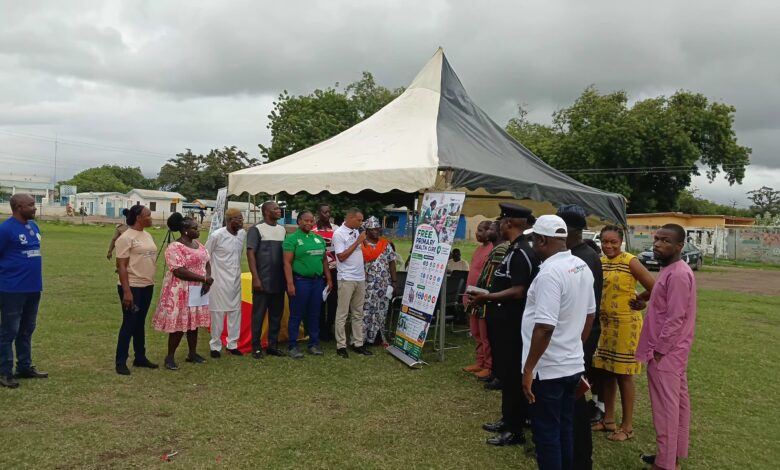
The Kassena-Nankana West District has officially launched the government’s Free Primary Healthcare Programme, with health officials and district authorities describing the initiative as a major step towards achieving universal health coverage and removing financial barriers to healthcare access.
The programme, which forms part of a national policy being implemented by the Ministry of Health, seeks to expand access to essential healthcare services at Community-based Health Planning and Services (CHPS) compounds, clinics, health centres and polyclinics across selected districts nationwide.
Speaking during the launch held at the District Health Directorate on Wednesday July 15, the District Free Primary Healthcare Coordinator, John Ayamga, said the initiative builds on decades of healthcare reforms aimed at ensuring healthcare is accessible to all Ghanaians.
He traced the evolution of primary healthcare delivery in Ghana from the Alma-Ata Declaration of 1978 through the introduction of the Community-based Health Planning and Services (CHPS) concept in the 1990s and the establishment of the National Health Insurance Scheme (NHIS) in 2003.
According to him, the Free Primary Healthcare Programme represents the latest intervention designed to strengthen healthcare delivery and accelerate Ghana’s progress towards achieving universal health coverage by 2030.
Ayamga explained that one of the programme’s primary objectives is to reduce out-of-pocket healthcare expenditure by removing financial barriers at the primary healthcare level.
He noted that while Ghana’s out-of-pocket healthcare spending remains above internationally recommended levels, the new initiative is expected to significantly ease the financial burden on households.
“The new policy seeks to ensure that money does not become a barrier to accessing quality healthcare services at the primary level,” he said.
He added that the programme will place a strong emphasis on preventive healthcare services, including health promotion, disease prevention and early detection of illnesses at the community level.
The coordinator clarified that the initiative covers services provided at CHPS compounds, clinics, health centres and polyclinics, but does not extend to district hospitals, where patients will still be required to use their National Health Insurance cards.
Addressing the gathering, the District Chief Executive for Kassena-Nankana West, Stephen Aeke Akurugo, described the initiative as a fulfilment of government’s commitment to improving healthcare access, particularly for vulnerable and underserved communities.
He noted that the programme was launched nationally by President John Dramani Mahama on April 15, 2026, and said its implementation in Kassena-Nankana West reflects government’s determination to ensure that no community is left behind.
According to him, many communities across the district continue to face challenges in accessing healthcare services, making the programme particularly important to local residents.
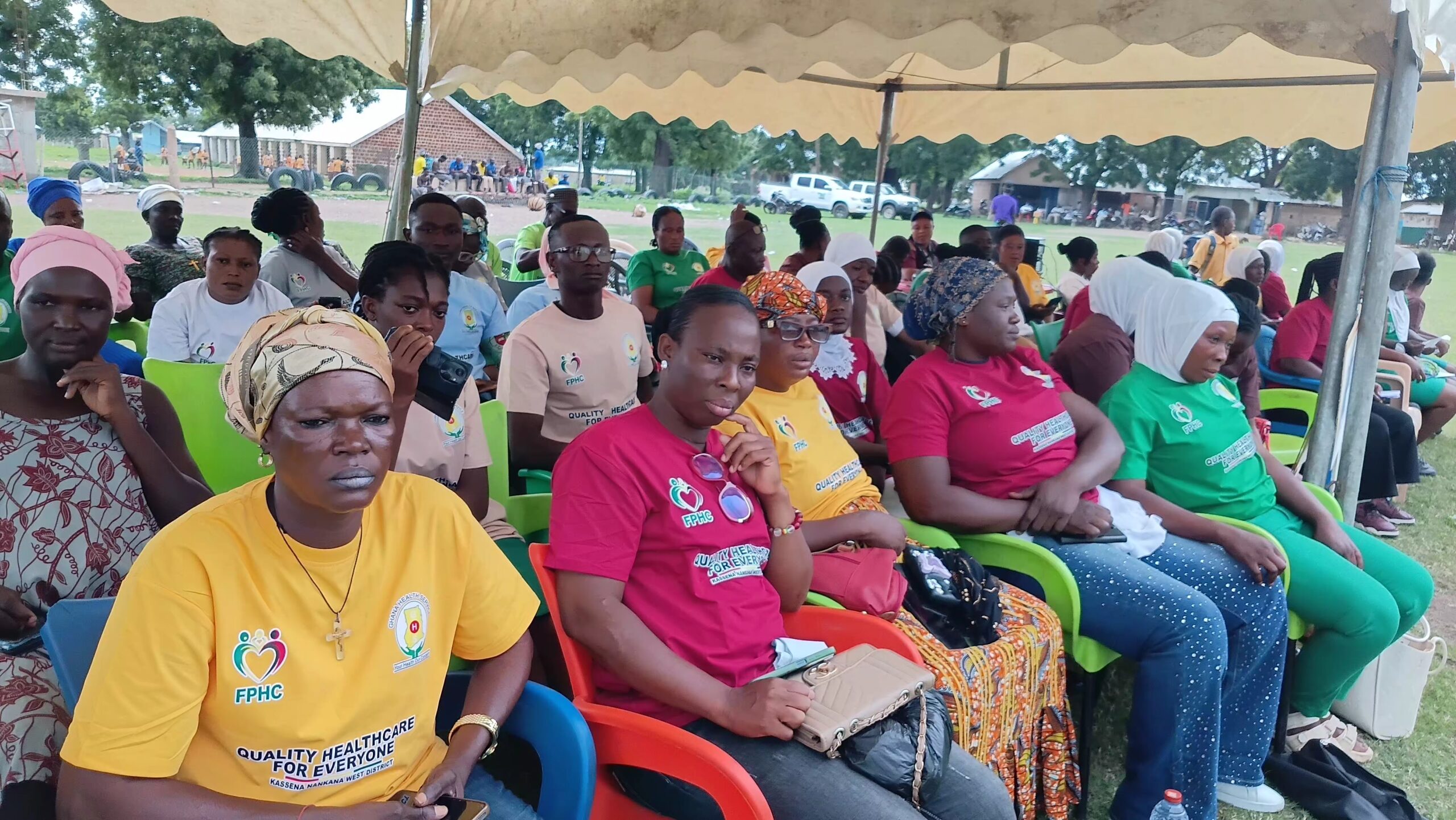
“Free primary healthcare is not just another government programme; it is a promise fulfilled. It confirms that our people matter and that no part of Ghana will be left behind in the quest for quality healthcare,” he stated.
Akurugo explained that the programme would strengthen preventive healthcare and community-based services by bringing essential healthcare closer to households through CHPS compounds and health centres.
He said the initiative would improve access to immunisation, antenatal care, health education, screening services and early treatment of common illnesses, particularly for children, pregnant women, the elderly and other vulnerable groups.
The DCE stressed that the programme complements rather than replaces the National Health Insurance Scheme and is intended to address existing gaps in healthcare access.
“By removing financial barriers at the primary level, we are making healthcare more equitable and inclusive for everyone,” he said.
He further described the initiative as both a healthcare and development intervention, noting that improved health outcomes would contribute to increased school attendance, agricultural productivity and overall socio-economic development.
Akurugo called on traditional leaders, religious organisations, community volunteers, youth groups and residents to support the programme and promote preventive healthcare practices within their communities.
He also commended health workers for their dedication despite operational challenges and assured them of the District Assembly’s continued support.
The DCE announced plans to procure additional medical equipment for health facilities across the district this year to improve service delivery and address equipment shortages that often hinder healthcare provision.
In addition, he disclosed that efforts are underway to support the establishment of National Health Insurance Scheme zonal offices in both the eastern and western parts of the district to improve access to NHIS registration and renewal services.
Akurugo expressed optimism that the programme would mark the beginning of a new era in healthcare delivery, where preventable illnesses are reduced, maternal and child health outcomes improve, and families are protected from financial hardship arising from medical expenses.
Mike 105.3FM | Navrongo | Abiiro Samuel Atule