Anatu Seidu Bogobiri Esq proposes Navrongo Trade Hub to empower women
The NHIA Deputy CEO has proposed a Navrongo Trade Hub to help women add value to shea, vegetables and smocks through processing, branding and marketing, creating jobs and expanding access to local and international markets.
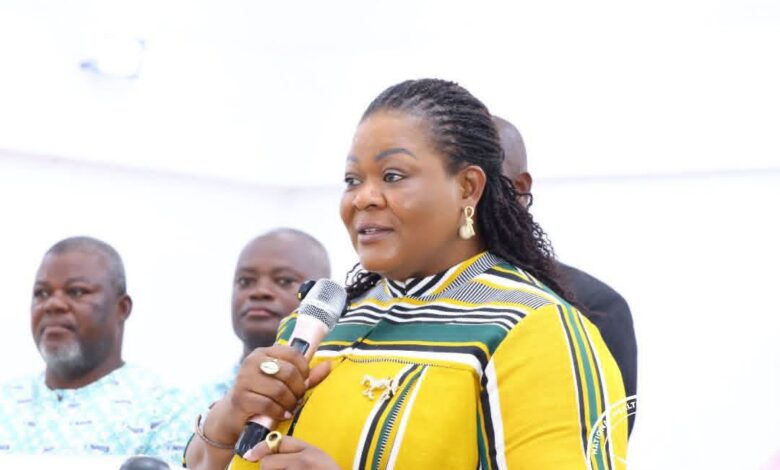
Lawyer Anatu Seidu Bogobiri, Deputy Chief Executive Officer of the National Health Insurance Authority (NHIA) in charge of Finance and Investment has proposed the establishment of a Navrongo Trade Hub (NATH) to promote women’s economic empowerment through processing, packaging, branding and marketing of locally produced goods.
The proposal was presented on her behalf at the Navrongo FAO Development Dialogue on Friday October 9, at the University of Technology and Applied Sciences Auditorium in Navrongo.
The dialogue was held under the theme, “Celebrating Culture, Driving Development: Harnessing Local Resources and Talent for Sustainable Development.”
In her address, Lawyer Bogobiri said the proposed hub would help women move beyond selling raw materials to participating in more profitable stages of production and marketing.
She argued that the economic challenges facing women in the Kassena-Nankana area were not due to a lack of hard work or talent, but limited access to reliable markets and opportunities to add value to their products.
She cited the shea industry as an example, noting that women often collect and sell raw shea nuts at low prices, while the more profitable processing, packaging and branding activities take place elsewhere.
The proposed Navrongo Trade Hub would initially focus on three sectors: shea processing, commercial vegetable farming and smock weaving, providing a centralised facility for women to develop sustainable businesses.
Under the shea processing component, the hub would establish a common-user processing facility equipped with modern machinery to produce quality shea butter and finished products such as soaps, creams, lotions and oils.
For vegetable farming, the initiative would facilitate access to improved seeds, agricultural extension services, subsidised mechanisation and irrigation facilities, while helping women secure reliable buyers before planting.
Lawyer Bogobiri said the absence of dependable markets had discouraged vegetable production around the Tono Irrigation Scheme, as farmers risked losing their investments when produce remained unsold and spoiled.
She also called for an end to cultural beliefs that discourage women from cultivating certain crops, particularly pepper, insisting that farming should not be restricted by gender.
On smock weaving, the proposal seeks to organise women into cooperatives, improve access to modern looms and establish a common finishing and branding centre to ensure consistent product quality.
The facility would also include warehouses, storage facilities, packaging and labelling units, an exhibition and retail shop, a training hall and a crèche for nursing mothers.
Products from the three sectors would be marketed under a unified brand through digital and traditional platforms to attract buyers within Ghana and international markets.
To ensure sustainability, Lawyer Bogobiri proposed a business model based on shared infrastructure, collective marketing, secured markets before production and transparent financial management.
She called on the Kassena-Nankana Municipal Assembly to designate a suitable site for the project and incorporate it into its medium-term development plan and budget.
She also appealed to Navro-Pio and the Navrongo Traditional Council to provide land, while urging the FAO Dialogue Planning Committee and development partners to support a feasibility study, business plan and initial processing equipment.
Private investors were encouraged to partner with women’s groups, while women in the area were urged to organise and register under the proposed hub to benefit from the initiative.
Lawyer Bogobiri said the Navrongo Trade Hub could create employment for young people, increase household incomes, expand exports and strengthen women’s economic independence, stressing that the ultimate goal was to enable women to control more of the value generated from their products.
Mike 105.3FM | Navrongo | David Adapuna