Farmers urged to step up vigilance as striga threatens crops
Farmers in the Upper East Region have been urged to intensify vigilance and adopt preventive measures against the spread of Striga, which threatens maize, millet and sorghum production.
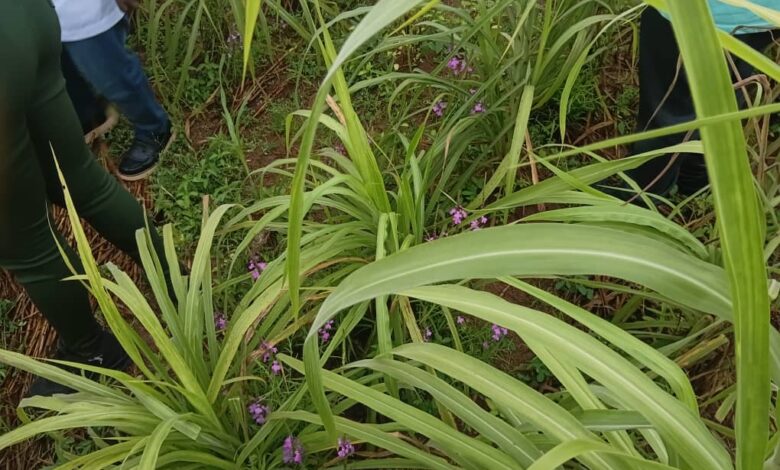
Farmers in the Upper East Region have been cautioned to take precautionary measures against the spread of Striga, a parasitic weed that can be transported from one farm to another through wind, livestock, farm equipment, contaminated soil and seeds.
Bolgatanga East District Extension Officer, Sebil Debey Allanburns, gave the warning during a field visit to a Striga-infested farm at Gambibgo, as part of a one-day media sensitization workshop on Striga control.
The workshop, held on Thursday September 17, in Bolgatanga, was organized by the Forum for Natural Regeneration (FONAR) in partnership with the Upper East Regional Department of Agriculture and the Upper East Regional branch of the Ghana Journalists Association.
It was aimed at equipping media practitioners with knowledge to improve public education and awareness on the identification, prevention and control of the parasitic weed.
Allanburns explained that Striga seeds are extremely small and can easily be transported unknowingly when farmers move hoes, cutlasses and other farm equipment from infested fields to unaffected farms.
He said livestock could also spread the seeds as they move between farms, while wind and water could carry them to nearby fields.
The movement of contaminated soil was identified as another pathway through which Striga could establish itself in previously unaffected fields.
Allanburns further cautioned farmers who recycle seeds to exercise particular care, noting that Striga seeds could remain mixed with harvested crops and subsequently be introduced into the soil when the seeds are planted in the following farming season.
He explained that Striga is difficult to control because its seeds can remain dormant in the soil for several years, waiting for favourable conditions, including moisture and the presence of a suitable host crop, before germinating.
After germination, the weed attaches itself to the roots of crops such as maize, millet and sorghum, from which it draws water and nutrients. This means damage to crops can begin underground before the weed becomes visible above the soil.
Farmers have therefore been advised to regularly scout their fields and remove Striga as soon as it is detected, ensuring that the plants are properly destroyed before flowering and producing additional seeds.
They have also been encouraged to report suspected Striga infestations to agricultural extension officers for technical assistance and to adopt control measures such as crop rotation, early planting and the use of improved Striga-tolerant varieties.
The sensitization forms part of efforts by FONAR and its partners to strengthen public awareness and promote coordinated action against Striga, which continues to pose a threat to crop production and food security in the Upper East Region.
Mike 105.3FM I Navrongo | Elizabeth Apusaama