Commercialisation of funerals threatens cultural identity, burdens families financially – Chief Anontara
Naaba Clement Asakiya Anontara warns that increasingly expensive and elaborate funeral celebrations are weakening indigenous traditions and placing financial pressure on bereaved families.
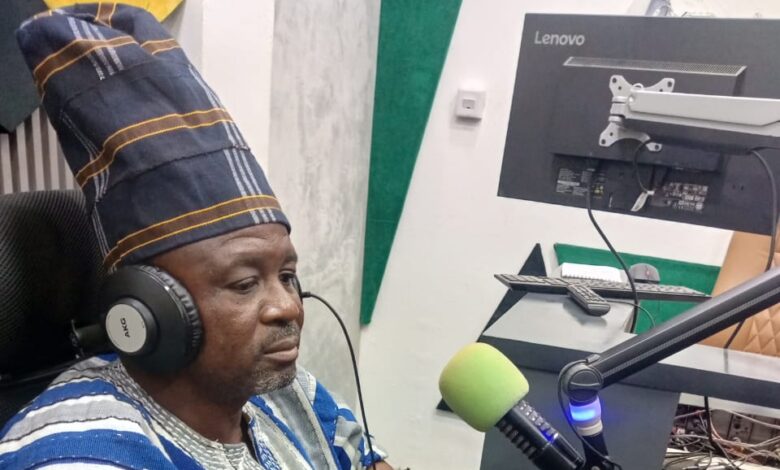
The Chief of the Agayea Divisional Area of Doba in the Kassena-Nankana Municipality, Naaba Clement Asakiya Anontara has raised concerns over the growing commercialisation of funerals, warning that the practice is gradually eroding cultural identity and imposing unnecessary financial burdens on bereaved families.
He said funerals, which traditionally served as solemn occasions to honour the dead and offer support to grieving families, were increasingly becoming elaborate social celebrations, with some activities deviating from established cultural values and traditions.
Speaking on Voices of Change on Mike FM on Saturday November 7, Naaba Anontara lamented that several traditional funeral rites and cultural practices were gradually being abandoned, while foreign customs and practices were increasingly being adopted by communities.
He explained that although singing, dancing and other cultural activities traditionally formed part of funeral celebrations, such practices should not overshadow the solemn purpose of mourning the deceased.
According to him, funerals in the past were mainly celebrated with elaborate drumming and dancing for elderly people who had lived long enough to have grandchildren and great-grandchildren. However, the practice has changed, with similar celebrations now accompanying the funerals of younger people.
He observed that the serving of food and drinks, alongside prolonged drumming and dancing, had gradually transformed funerals into occasions for entertainment rather than solemn moments of grief.
Naaba Anontara also expressed concern about the declining communal support traditionally extended to bereaved families, particularly through the preparation and sharing of food.
He recalled that neighbours and community members would previously prepare meals and take them to bereaved households to support them during their period of mourning.
However, he said the practice was gradually giving way to a situation where mourners expected bereaved families to provide food and drinks for them.
The chief further cautioned against the practice of taking leftover food from funeral grounds to individual homes, arguing that it was traditionally discouraged because of its perceived spiritual implications and concerns about possible food contamination and food poisoning.
On the financial implications, Naaba Anontara described the rising cost of funeral celebrations as alarming, citing figures from a recent study which, according to him, put the average cost of funerals in Ghana between GH¢15,000 and GH¢95,000, with elaborate ceremonies costing as much as GH¢200,000.
He said such financial demands could place considerable pressure on families, forcing some to commit substantial resources to funeral arrangements at the expense of other essential needs.
He further warned that the growing preference for elaborate funeral celebrations and the abandonment of indigenous customs could undermine the preservation of cultural identity and traditional values among younger generations.
Naaba Anontara therefore called on traditional authorities, families and community members to reflect on the original purpose of funerals and work towards preserving indigenous funeral practices.
He urged communities to promote meaningful, disciplined and culturally appropriate funeral celebrations that honour the deceased without imposing excessive financial demands on bereaved families.
Mike 105.3 FM I Navrongo | Cynthia Afaah