Water crisis, poor sanitation threaten school punctuality and public health in Gongnia, Nayagenia
Residents of Gongnia and Nayagenia call for improved water access, dam desilting and accessible sanitation facilities to protect public health and improve school punctuality. Tags: Water Crisis, Sanitation, WASH, BEW
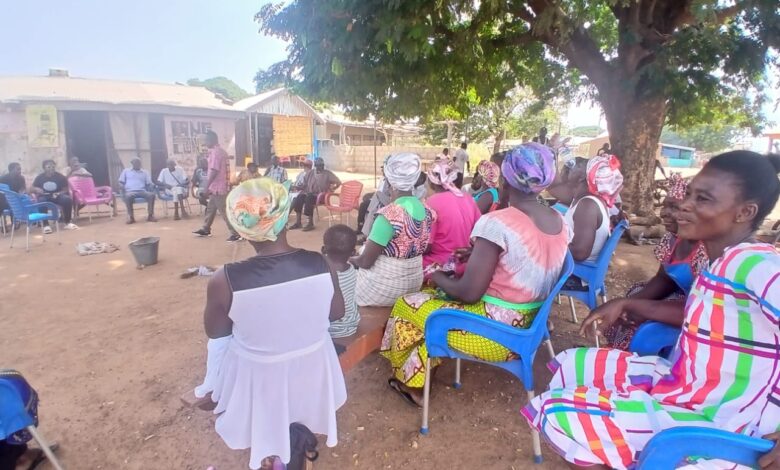
Residents of Gongnia and Nayagenia in the Kassena-Nankana Municipality are calling for improved access to water and sanitation facilities, citing challenges that threaten public health, disrupt daily activities and affect school punctuality.
In Gongnia, residents say water shortages force children to spend considerable time searching for water before preparing for school, affecting their ability to arrive in class on time and concentrate on their studies.
They also lament the difficulty of accessing water, particularly in March, when water levels in boreholes reportedly decline, forcing users to pump for extended periods before water begins to flow.
Residents further explained that the long distances to boreholes and lengthy queues often delay their daily activities, placing additional pressure on households.
Beyond water access, poor sanitation practices, including indiscriminate waste disposal and open defecation, have raised concerns about environmental pollution and the spread of diseases.
In Nayagenia, residents are calling for the desilting of their community dam to increase its capacity to retain water, particularly during the dry season.
The dam serves several purposes, including irrigation farming, construction activities and providing water for livestock. However, residents say the accumulation of silt has reduced its water-holding capacity, making it less reliable during periods of water scarcity.
One of the community champions disclosed that livestock sometimes become trapped in the mud as water levels recede, creating additional difficulties for animal owners.
The community champions believe desilting the dam would improve water availability for farming, construction and livestock, while easing the burden on residents during the dry season.
Sanitation also remains a major concern in the communities, where open defecation and indiscriminate refuse disposal contribute to environmental pollution and unhealthy living conditions.
Residents particularly highlighted the lack of decent and accessible toilet facilities, which they say disproportionately affects women, nursing mothers and persons with disabilities.
They also identified inappropriate waste disposal and climate change as challenges requiring sustained community education and effective interventions to improve environmental conditions and sanitation.
The concerns have prompted calls for relevant authorities and community leaders to prioritise sustainable water infrastructure, accessible toilet facilities, proper waste management and public education on sanitation and hygiene.
Addressing these challenges, residents believe, would improve school punctuality, protect public health and enhance the overall well-being of community members.
The concerns were raised at a community forum organised by the Belim Wusa Development Agency (BEWDA), in partnership with WaterAid Ghana, on Tuesday October 20.
The forum sought to empower community members to advocate for improved Water, Sanitation and Hygiene (WASH) services by helping them understand the effects of inadequate WASH facilities and equipping them with the skills to present their concerns to relevant duty-bearers.
Mike 105.3 FM I Navrongo | Cynthia Afaah