Communities urged to sustain gains as SHARE Project ends in Upper East
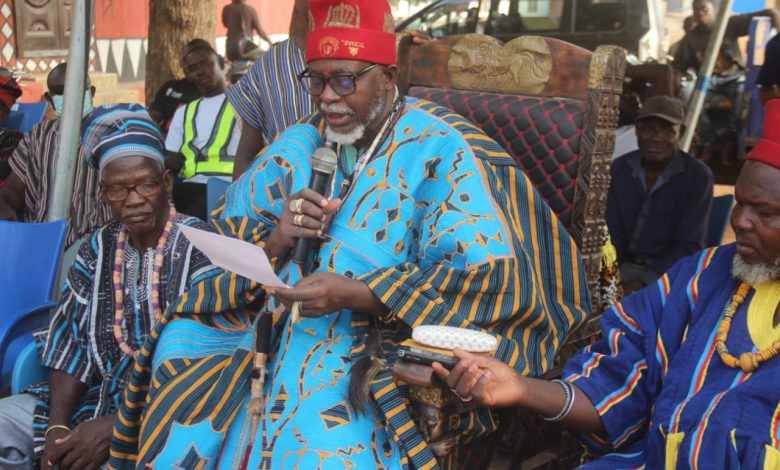
The Paramount Chief of the Navrongo Traditional Area, Pe Aniakwa Balinia Adda, described the end of the project not as a closure, but as a transition of responsibility to the communities.
Traditional leaders and stakeholders in the Upper East Region have pledged to sustain the progress made under the Sexual Health and Reproductive Education (SHARE) Project as its five-year implementation in Ghana comes to an end.
The commitment was made at a colourful durbar held at the palace of the Navro Pio in Navrongo on Tuesday, February 24, where chiefs, community members and partner institutions gathered to mark the conclusion of the initiative led by the Forum for African Women Educationalists Ghana.
The Paramount Chief of the Navrongo Traditional Area, Pe Aniakwa Balinia Adda, described the end of the project not as a closure, but as a transition of responsibility to the communities.
“Every good seed that has been planted must be nurtured by the very soil in which it grows,” he said, urging residents to take ownership of the interventions and ensure their continuity.
The SHARE Project was designed to tackle challenges relating to adolescent sexual and reproductive health and rights, while addressing harmful cultural practices affecting young people. Implemented across Bongo, Kassena-Nankana West, Kassena-Nankana Municipal and Builsa North, the initiative reached 200 schools, 75 health facilities and 78 electoral areas.
In an interview with Mike FM, the Executive Director of FAWE Ghana, Richard Amoani, explained that the project sought to empower adolescents with accurate information and life skills, enabling them to make informed decisions and remain in school.
He noted that although funding for the project will end in March, efforts are underway to sustain its impact through continued community engagement and institutional collaboration.
“We do not want the impact to end with the funding. The goal is to ensure that communities continue to benefit fully from the gains made,” he stated.
Board Chairperson of FAWE Ghana, Marian Tackie, stated significant shifts in community attitudes, particularly towards girls’ education. According to her, engagement with opinion leaders and families has led to increased support for girls to stay in school rather than being confined to early marriage and childbearing.
She added that the project improved knowledge of menstrual hygiene among girls and contributed to reducing teenage pregnancies through sustained advocacy and education.
Beneficiaries at the durbar shared personal testimonies, crediting the programme’s workshops, training sessions and community dialogues for improving communication between parents and children on sexual health matters.
They also pointed to progress in addressing issues such as illicit sex and drug abuse among the youth.
The event brought together officials of FAWE across Africa, representatives of the Commission on Human Rights and Administrative Justice, the Ghana Education Service and the Ghana Health Service, alongside traditional authorities, youth groups and other stakeholders.
Mike 105.3FM | Navrongo | David Adapuna