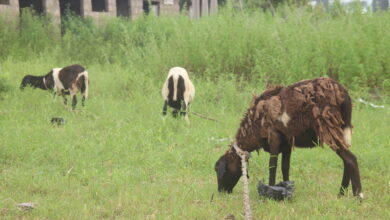
Farmers urged to embrace climate-smart agriculture and improved livestock management
Agricultural Extension Officer advises farmers to adopt improved seed varieties, conservation farming methods, and commercial livestock practices to boost productivity and withstand climate change impacts.

The Kassena-Nankana Municipal Department of Agriculture has urged farmers to adopt climate-smart agricultural practices and improve livestock management to protect their investments and enhance productivity during the 2026 farming season.
Speaking on the Big Mike Breakfast Show on Thursday, June 18, Agricultural Extension Officer Justin Apogura said the growing impact of climate change on rainfall patterns and agricultural production requires farmers to adopt more resilient farming methods.
According to him, the use of improved seed varieties and conservation farming techniques, including minimum tillage, can help farmers withstand drought conditions and secure better yields.
“One of the best climate-smart recommendations we give to farmers is to adopt improved crop varieties that perform well and mature early,” he said.
Apogura explained that short-duration, high-yielding crop varieties offer farmers a better chance of achieving successful harvests, even when rainfall becomes erratic or ends earlier than expected.
He also cautioned against excessive soil disturbance through deep ploughing and the indiscriminate application of agrochemicals, warning that such practices can degrade soil fertility and reduce long-term productivity.
“If you disturb the soil too much by continuous tractor ploughing and excessive chemical application, you risk destroying the health of the soil,” he stated.
On livestock production, Apogura advised farmers to undertake routine treatment and deworming of animals before and during the rainy season to reduce disease outbreaks and prevent avoidable losses.
“If livestock are properly dewormed and managed, farmers can save a significant percentage of their animals from preventable deaths,” he noted.
He further encouraged livestock owners to shift from traditional practices of keeping large numbers of animals for social status and instead manage livestock as commercial enterprises.
“We have gone past the stage where animals are kept merely for prestige. Livestock production should be viewed as a business and managed profitably,” he emphasized.
Apogura also warned against the consumption of animals that die after receiving treatment or vaccination, stressing that drug residues in such animals could pose serious health risks to consumers.
“Any animal that has been treated and subsequently dies should not be consumed under any circumstances because it may not be safe for human health,” he cautioned.
He further encouraged farmers to maintain proper farm records, invest profits prudently, and regularly engage agricultural extension officers for technical support and guidance.
Apogura said adopting climate-smart agriculture and sound livestock management practices would not only improve productivity but also strengthen farmers’ resilience to the effects of climate change and contribute to food security in the municipality.
Mike 105.3FM I Navrongo | Elizabeth Apusaama