Peace Council sensitizes Kadema residents on dangers of online violent extremist Narratives
Participants trained to identify extremist recruitment tactics, misinformation, and harmful online content under Atlantic Corridor Project
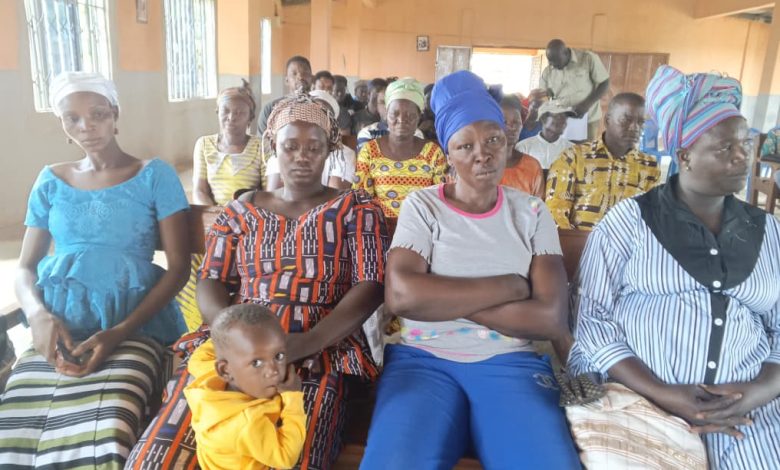
The Upper East Regional Peace Council has sensitized residents of Kadema in the Builsa North Municipality on the dangers of online violent extremist narratives as part of efforts to strengthen community resilience against extremist influences and promote peace and security in the area.
The one-day engagement, held at the Catholic Church in Kadema on Tuesday, May 26, brought together selected participants from communities within the Kadema zone to discuss strategies for preventing and responding to online violent extremist narratives.
The programme was organized by the National Peace Council in partnership with the United Nations Development Programme (UNDP), with funding support from the Norwegian and Danish Embassies.
It sought to equip community members with the knowledge and skills needed to identify, prevent, and counter threats posed by violent extremist groups operating through digital platforms.
Participants were taken through a series of theoretical and practical sessions focused on understanding online violent extremist narratives, recognizing recruitment tactics, and responding appropriately to suspicious online content.
Speaking at the event, the Upper East Regional Executive Secretary of the Peace Council, Damien Asobayire, explained that the programme was designed to raise awareness about how violent extremist groups exploit online platforms to recruit and radicalize individuals.
“Today’s programme is aimed at sensitizing community members on online violent extremist narratives. These are messages, stories, and explanations used by violent extremist groups to recruit and radicalize people to support or participate in their activities. Many people are unaware of these tactics,” he said.
Asobayire noted that while many people assume extremists must physically enter communities to recruit members, modern technology has shifted much of the recruitment process online.
“Most people use mobile phones every day. Therefore, it is important to be mindful of the messages we receive, read, and sometimes share with others. Through this sensitization programme, we are exposing participants to some of these narratives and helping them identify warning signs when they encounter such content online,” he added.
He further indicated that participants were introduced to counter-narratives and trained to distinguish between misinformation, disinformation, and malinformation, which are often used to manipulate public opinion and create divisions within communities.
Asobayire disclosed that similar sensitization programmes would be held in Wiesi and Bachonsa in the Builsa South Municipality, with follow-up engagements planned for civilian security groups in the coming week.
According to him, the initiative forms part of the broader Atlantic Corridor Project, which seeks to prevent and counter violent extremism in vulnerable communities across the Atlantic corridor.
Participants expressed appreciation to the Peace Council, UNDP, and the programme’s funding partners for the timely intervention and pledged to share the knowledge acquired with others in their communities.
One participant, Lordison Adangabey, described the programme as both timely and impactful.
“I think this awareness creation is very important because many of us were ignorant about these issues. The explanations provided have deepened our understanding and made us more aware of the dangers associated with online extremist content,” he said.
Another participant, Paulina, commended the organizers, saying the programme had highlighted the need for people to critically assess information before accepting or sharing it.
“It has taught us to be more mindful of the type of information we receive and consume on our various platforms. I believe this knowledge will greatly benefit our communities,” she stated.
Mike 105.3FM I Navrongo | Edmond Kwaching Agwaazeh