UNDP and FCDO train Journalists in Northern Ghana on fact-checking and conflict-sensitive reporting
The training aimed to promote responsible reporting and reduce the risk of conflict escalation through misinformation and inflammatory media content.
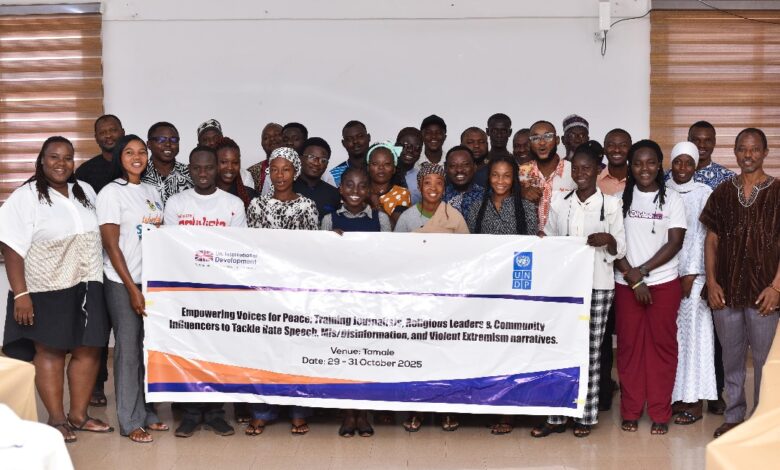
The United Nations Development Programme (UNDP), with funding support from the Foreign Commonwealth and Development Office (FCDO), has organized a three-day capacity-building workshop for journalists, bloggers and religious leaders from Northern Ghana on fact-checking and conflict-sensitive reporting.
The training, which began on October 29, 2025, in Tamale, aimed to promote responsible reporting and reduce the risk of conflict escalation through misinformation and inflammatory media content.

In his solidarity message at the opening session, George Sarpong, Executive Secretary of the National Media Commission (NMC), reflected on the importance of peace journalism, recounting how his experiences in Tamale shaped his understanding of peace and coexistence.
“Tamale is a city that gave me the deepest insight into what peace truly is. Words authored are seeds that can sow peace or plant poison in hearts.” He said
Sarpong emphasized that in an era where falsehoods spread faster than truth, journalists must be vigilant to avoid reporting or amplifying inflammatory statements that divide communities and incite violence.
“Grievances can turn into gunfire, and rumours into wildfire if not reported wisely and responsibly,” he cautioned.
He urged participants to prioritize verification, accuracy, and empathy in their work. Saying, “violent extremism does not begin with a weapon; it begins with a word. If we must fight extremism, we must begin by reclaiming the language of peace,”
H added that, “If our words are poisoned with hate, our world will shrink into fear and suspicion. But if our words carry truth and empathy, our world will stand on understanding and cooperation.”

Eugene Yirbour, a facilitator and Senior Conflict Advisor, led the sessions on capacity building to enhance the media’s role in fact-based, conflict-sensitive reporting and information hygiene for peace.
Yirbour explained that while conflict is a natural part of human interaction, its outcomes depend largely on how it is managed and communicated.
“Conflict is not always bad or negative. Constructive conflict can help address root causes, improve relationships, and promote understanding, while destructive conflict leads to violence and division.”
He stated conflict sensitivity is the ability to understand and respond to conflict in ways that consider the complex dynamics, needs, and interests of all parties involved. He urged journalists to be mindful of the potential impact of their stories, words, and headlines on fragile peace situations.
On fact-checking, Yirbour encouraged reporters to adopt rigorous verification practices, including consulting multiple credible sources, engaging subject-matter experts, and remaining impartial in their reporting.
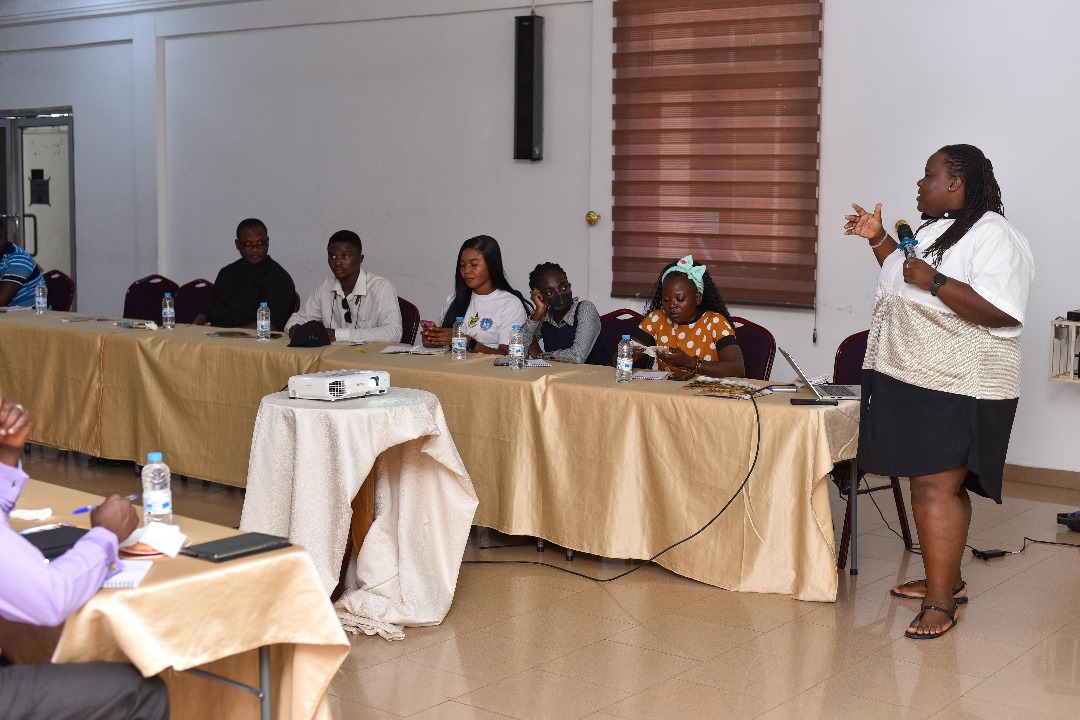
“Fact-checking is about verifying information through research and evidence-based methods. It’s about ensuring accuracy and truthfulness before publication.” He explained.
He also highlighted the link between irresponsible reporting and violent extremism, warning that misinformation can deepen divisions and fuel radicalization.
“Violent extremism is a threat to peace and tolerance. It is not enough to counter it, we must prevent it by addressing its root causes such as poverty, marginalization, inequality, and manipulation,” he said.
Mike 105.3 FM | Navrongo | Cynthia Afaah