Upper East WASH systems expose critical gaps as climate risks mount
Assessment findings from five districts reveal water scarcity, poor sanitation, damaged infrastructure and climate-related pressures affecting vulnerable communities across the Upper East Region.
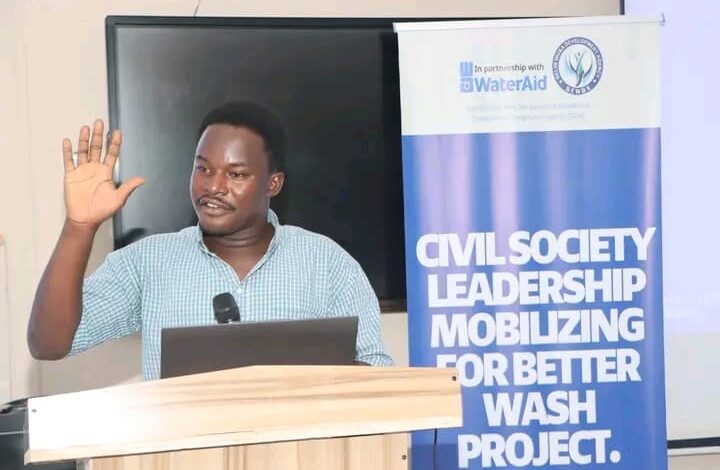
Critical gaps in water, sanitation and hygiene (WASH) services across five districts in the Upper East Region have been brought to the attention of journalists as climate-related pressures continue to threaten access to essential services.
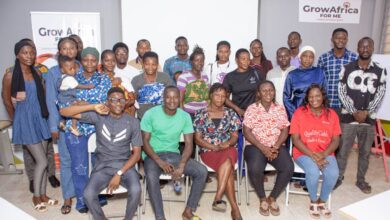
The findings were presented during a three-day climate and WASH reporting training organised by the Belim Wusa Development Agency (BEWDA) in partnership with WaterAid Ghana under the SIDA CLIMB Better WASH Partnership at the TAP Hotel in Bolgatanga.
The training sought to strengthen journalists’ understanding of the relationship between climate change and WASH and equip them to report more effectively on how climate-related challenges are affecting vulnerable communities.
Presenting findings from assessments conducted in five districts, Sebastian Mbabugri Agumah, Project Lead for the SIDA CLIMB Better WASH Partnership, said climate-related pressures were already affecting essential WASH services in the communities assessed.
In Bawku West, journalists were informed that potable water coverage stands at about 68 per cent, while sanitation coverage is only 17 per cent.
About 33.8 per cent of point-source water facilities in the district are reportedly non-functional, while water availability can decline by approximately 25 per cent between March and June.
In Bongo District, potable water coverage is relatively high at about 82 per cent. However, safe water access remains a challenge due to high fluoride concentrations in groundwater, which have resulted in the decommissioning of several boreholes.
Agumah explained that the situation becomes more severe during periods of water scarcity when communities are forced to depend on fewer available water sources.
A community elder in Soe captured the situation, saying, “A lot of the dams will dry, putting pressure on the available boreholes.”
In the Kassena-Nankana Municipality, the assessment showed that only about 55 per cent of the population has access to improved drinking-water sources, while improved sanitation coverage stands at 35 per cent.
The assessment also indicated that about 1,200 households were affected by flooding in 2021, disrupting water services and damaging WASH infrastructure.
The situation in Kassena-Nankana West District was similarly concerning, with only 55 per cent of the population having access to reliable drinking-water sources and 35 per cent having access to adequate sanitation facilities.
Journalists were also informed that women in the district can spend an average of three to four hours each day collecting water, particularly during the dry season, highlighting the disproportionate burden water scarcity places on women and girls.
For Nabdam District, the assessment showed that about 60 per cent of households rely on unprotected water sources during the dry season.
Groundwater levels have reportedly declined by between 10 and 15 per cent over the past decade, while dry-season surface-water flows have reduced by between 25 and 30 per cent.
Agumah said the statistics should help journalists connect climate change to the everyday realities of vulnerable communities rather than treating it as an abstract environmental issue.
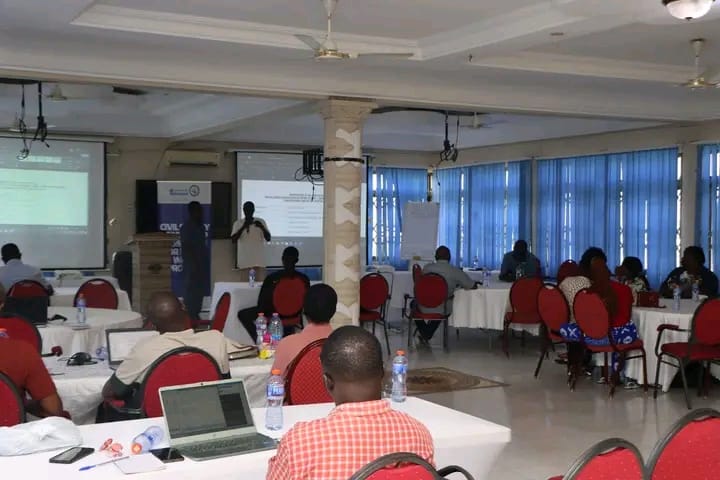
“These communities we are talking about, they are very vulnerable communities,” he said, stressing that rebuilding WASH facilities damaged by storms and other extreme weather events can be a major challenge for affected households.
He also drew attention to sanitation challenges, noting that sanitation coverage in the areas discussed was estimated at 38.8 per cent, and urged journalists to explain emerging concerns such as fluoride contamination and its potential implications for public health.
According to Agumah, extreme weather events such as storms can repeatedly destroy toilets and other WASH facilities, leaving vulnerable households struggling to rebuild.
The five district assessments therefore highlighted different dimensions of the broader WASH and climate challenge, from inadequate sanitation and non-functional water facilities in Bawku West, to fluoride contamination in Bongo, flooding-related damage in Kassena-Nankana, prolonged water-collection burdens in Kassena-Nankana West and declining water availability in Nabdam.
The training encouraged journalists to use such evidence to produce more meaningful, people-centred climate and WASH stories that highlight the lived experiences of vulnerable communities while also identifying responsible institutions and pressing duty-bearers to address persistent gaps.
Mike 105.3FM I Navrongo | Cynthia Afaah