Journalists urged to shift from fear-based to evidence-driven migration reporting
Workshop highlights need for balanced reporting on ECOWAS free movement, migration, and regional integration
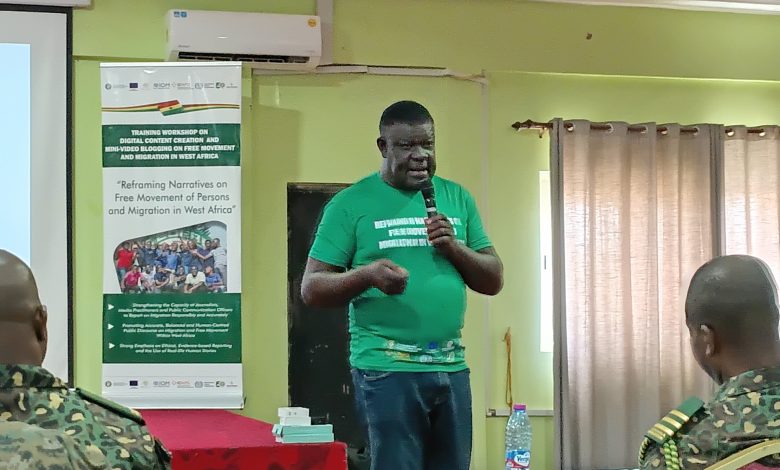
The Executive Director of Media Response-Ghana, Samuel Dodoo, has called on journalists and media practitioners to adopt evidence-based reporting on migration within the ECOWAS sub-region, warning that distorted narratives can fuel misinformation and xenophobia.
He explained that migration reporting must be grounded in facts rather than assumptions, stressing the need for journalists to avoid framing cross-border movement as criminal activity without proper verification.
Speaking at a one-day training workshop on content creation and mini-video blogging on Free Movement and Migration (FMM) in West Africa, Dodoo said ECOWAS free movement should not be misunderstood as unregulated border access or the absence of immigration controls.
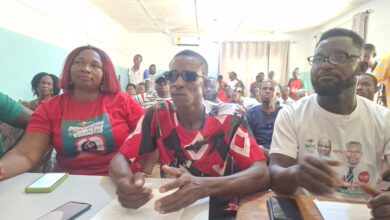
The workshop, held at the Blue Sky Hotel in Bolgatanga on Wednesday, May 20, 2026, was organised by Media Response with support from FMM West Africa under the FMM West Africa II Project.
Dodoo clarified that free movement within ECOWAS is a structured system based on documented rights and obligations, and does not remove the responsibility of member states to enforce immigration laws or maintain national sovereignty.
He noted that ECOWAS member states are required to ensure that citizens are properly documented, citing national identification systems such as Ghana’s Ghana Card as part of that framework.
According to him, the free movement protocol includes defined stages such as the right of entry, residence after a specified period, and the right of establishment, all of which operate under national immigration procedures.
He further explained that member states retain the authority to verify identity, enforce border security, and deny entry where necessary in line with national laws.
Dodoo cautioned against common misconceptions that free movement eliminates border checks or weakens state sovereignty, describing such interpretations as inaccurate.
He also addressed concerns about irregular migration and human trafficking, urging journalists to distinguish clearly between lawful mobility, smuggling of migrants, and trafficking in persons.
According to him, conflating these concepts can lead to the criminalisation of legitimate cross-border movement and reinforce negative stereotypes about migrants.
He encouraged journalists to move away from sensational or fear-based framing and instead focus on balanced, contextual reporting that highlights both the opportunities and challenges of migration in the sub-region.
“Migration reporting must move from fear-based framing to evidence-based framing, from crisis narratives to development narratives, from generalisation to contextualisation, and from stigmatisation to human dignity,” he said.
Dodoo added that mobility and security are complementary, noting that effective migration governance requires both facilitation of movement and enforcement of border security.
He also advised media practitioners to be mindful of terminology, warning against the casual use of labels such as “trafficking” when reporting on migration-related issues without proper evidence.
The training formed part of broader efforts to improve digital content creation and mini-video blogging skills among journalists, bloggers, and communication officers across West Africa, with a focus on improving public understanding of migration and regional integration.
The workshop also featured contributions from immigration officials and media experts who emphasized the importance of accurate reporting and deeper understanding of ECOWAS protocols.
Mike 105.3FM | Navrongo | Samuel Atule Abiiro