I recently wrote a piece on the removal of Ghana Chief Justice entitled “The Gathering of Fowls: A Nation Wounded – The CJ Removal” (see my Facebook page).” I stand by every word in that piece, and even more so today. Since then, I have followed the commentary and reactions with great interest. Some have been thoughtful, others dismissive, many impassioned. I welcome and respect them all, because debate is healthy for democracy. Opinions, after all, are like noses; everyone has one.
But what concerns me is not the disagreement itself; it is the underlying philosophy these responses reveal about our civic consciousness. They reflect something deeper about how we, as citizens, understand our role in this democracy. They compelled me to return to a lecture I once gave during an Independence Day celebration at my university alumni gathering in China, a lecture I entitled “The Ghana We Want.” Today, I revisit those reflections, but with a sharper question: What is the Ghana you want?
The comments on my post were predictable. Some argued that the NPP used the same law to remove the former Electoral Commission Chair, Charlotte Osei. Others asked where we were when the Chief Justice was part of unanimous 11:0 rulings at the Supreme Court. Still others invoked Article 147 of the Constitution as justification for her removal. And many pointed out that when Charlotte Osei was removed, there was silence, so why now?
These arguments, however passionately delivered, are beside the point. They are partisan echoes, distractions from the central issue. A constitutionally valid process can still be politically motivated, ethically hollow, and democratically corrosive. That is the danger we face. The problem is not whether the Constitution was cited. The problem is its misuse, not its breach, but its abuse. The problem is the weaponization of a tool meant to serve justice, turning it into an instrument of political vendetta.
Governance cannot be reduced to how cleverly one party outdoes the other in backwardness. Yet that is what we see, each party inheriting the worst practices of the other and perfecting them. They cling to the letter of the law when it suits their agenda, but abandon its spirit when justice demands otherwise. The Constitution was never meant to be a weapon. It was designed to protect institutions, not to punish individuals. When laws are applied selectively, they lose their moral force. Justice becomes a tool of convenience, not a pillar of democracy.
So, we must ask, what in truth justifies the removal of a Chief Justice? Which of the allegations against her rose to the level of fairness, justice, and humanity required to warrant such a drastic step? Which, if tested in a court of law, would secure a conviction? And even if one assumes, without admitting, that she erred, was removal the proportionate response? History offers perspective. Former Speaker of Parliament Doe Adjaho once refused to take the oath of office as acting president when both the President and Vice President were abroad (see further reading below).
That was a clear constitutional breach, yet he was not removed. President Mahama once traveled while both the Vice President and Speaker were absent, a constitutional violation, but he remained in office (see further reading below). President Akufo-Addo unconstitutionally removed Auditor General Daniel Domelevo, a decision the courts later overturned (see further reading below), yet he too remained untouched. These are not minor errors, they are serious infractions by the highest offices of the land.
Yet they carried no consequences. Why then does a co-equal branch of government, the judiciary, bear the harshest punishment for alleged infractions that cannot even withstand scrutiny? The truth is clear, this is not about justice. It is about power. It is about silencing dissent. It is about using the law not as a shield for citizens but as a sword against opponents. That is not governance. It is vengeance dressed in legal robes.
So, my concern stretches beyond the actions of politicians. It is about the response of citizens. For too long, we have allowed blind loyalty to parties to eclipse our loyalty to the nation. We justify backward behavior by pointing to past backward behavior. We defend today’s folly by citing yesterday’s precedent. This is not civic maturity; it is civic suicide. When citizens defend their own impoverishment, when they justify policies and practices that make their lives worse, when they cheer the very leaders who exploit them, then the nation itself is betrayed from within.
And so, I ask again, is this the Ghana you want? A Ghana that has returned to the IMF at least 17 times since independence, the last bailout in 2023, just seven years after the previous one? A Ghana where youth unemployment officially hovers around 12 percent, with underemployment above 30 percent, yet every election cycle promises “jobs” that never materialize? A Ghana where people in some communities still drink from dam water as though we have not crossed into the 21st century? A Ghana blessed with gold, cocoa, oil, and timber, yet cursed with mismanagement and poverty?
A Ghana where illegal mining has poisoned rivers from Ankobra to Pra, leaving entire generations with no clean water? A Ghana where state companies like GIHOC, selling alcohol, a globally profitable product, somehow post losses while private competitors thrive? A Ghana where politicians with no record of managing businesses or building institutions ascend overnight to high office, only to weaponize those offices against their opponents? A Ghana where public office is mistaken for superiority rather than recognized as a temporary privilege to serve?
Look closely. Some of our leaders insult the very citizens whose taxes pay their salaries. They travel abroad on our money, vacation on our money, pocket allowances larger than the annual salaries of hardworking teachers and nurses. They destroy opponents’ reputations and businesses, not realizing that in weakening their rivals, they weaken the economy itself. They run state enterprises into the ground and then turn to blame the same citizens they impoverish. And what do we do? Too often, we defend them. Too often, we justify arrogance and corruption because of crumbs that fall from their tables. Too often, we sell our voices cheaply for promises that never come. We legitimized their egregious abuses with our support, and endorsed our own impoverishment with our silence.
This is the Ghana we have. But it must not be the Ghana we want. We were once on equal footing with Singapore and China in the 1960s. Today, China is the world’s second-largest economy, and Singapore is a global hub of finance and innovation. We remain trapped in cycles of failure. The difference is simple: their institutions work, their governance is forward-looking, and their citizens demand better. Meanwhile, we tolerate the intolerable.
I want a different Ghana. A Ghana where politicians are not superior to the people they serve. A Ghana where the law is not twisted to destroy opponents but is applied to protect the weak. A Ghana where institutions function so effectively that citizens can secure services, apply for documents, and advance in life based on merit, not on whom they know. A Ghana where leadership is not about vengeance but about vision. A Ghana where public office is not about entitlement but about stewardship.
A Ghana where speaking truth to power does not invite retaliation, where one does not need to enter politics to secure a dignified life. A Ghana capable of managing its own cedi and stabilizing inflation without running, hat in hand, to the IMF. A Ghana where young people pursue innovation, enterprise, and creativity, not politics as the only route to survival. A Ghana where merit opens doors, where opportunity is not the preserve of the few but the promise of the many. A Ghana that makes her children proud, not ashamed, to call her home.
No one is forced to vie for public office. It is a choice. And if you cannot serve with integrity, competence, and vision, then do not come. We are not apolitical loyalists. We are conscientious objectors to the ills of the land because we have seen better elsewhere, even in countries with far fewer resources than Ghana. Citizenship is permanent, political office is temporary. We must rise above the arrogance of politicians who behave as though they own the state, when in truth they are only tenants of power. We must not be silenced by evil policies and backward governance that drag us all down together. We must demand a forward-looking country, because that is how nations are built. Nations do not rise when citizens accept crumbs from the tables of politicians. Nations rise when citizens demand bread baked from justice, accountability, and vision.
This is not too much to ask. This is not an impossible dream. It is the Ghana we deserve. But it will never come if we remain passive. It will never come if we continue to defend backward governance. It will never come if we settle for crumbs when we deserve the feast. It will come only when citizens rise above blind loyalty and demand nation-based governance over party-based politics.
And so, when I wrote, “Justice will rise, and when the fowls gather, no cockroach will be judged without cause,” I meant this: when citizens raise their voices against the misuse of power, when they demand better not for themselves alone but for the soul of the nation, then Ghana will rise. Justice will rise. And no one will be condemned simply for standing in the wrong room.
Let history record that we spoke. Let it record that we resisted. Let it record that we stood not for personalities, but for principles.
So again, I ask, is this the Ghana you want? Or are you ready to build the Ghana you deserve?
Further Reading
- Doe Adjaho broke law on ‘acting president’ oath, Supreme Court, November 2014.
https://www.graphic.com.gh/news/general-news/doe-adjaho-broke-law-on-acting-president-oath-supreme-court.html
- Minority raises concern over power vacuum during President Mahama’s absence, May 2015.
https://www.graphic.com.gh/news/politics/minority-raises-concern-over-power-vacuum-with-president-mahama-veep-and-speakers-absence-from-jurisdiction.html
- Domelevo’s forced leave unconstitutional, Supreme Court rules, May 2023.
https://www.graphic.com.gh/news/general-news/domelevos-leave-unconstitutional-supreme-court.html
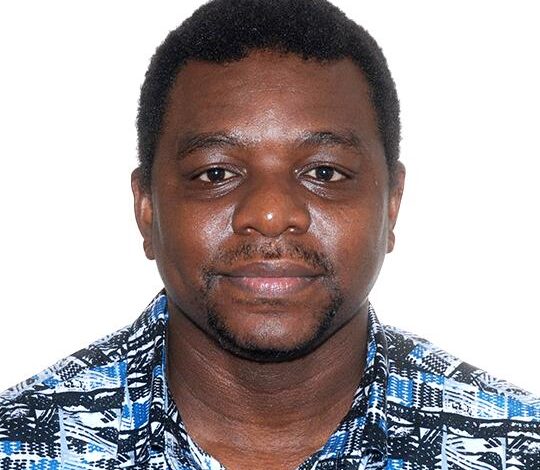
Author: Mark Awe Tachega, PhD. The Writer shares research interests in African economic development.
EDITOR’S NOTE: The views, opinions, and statements expressed in articles, commentaries, opinions or other contributions published by guest writers, opinionists, or contributors are solely those of the authors and do not necessarily reflect the official position, policy, or editorial stance of MIKE FM.