Rising land disputes: P. P. Apaabey advocates for conflict-management skills for farmers and ICOUR workers
He stressed that land ownership, by custom and law, rests with landowners, who work through traditional authorities to make land available to investors. According to him, while traditional leadership facilitates access to land, state agencies and district assemblies are ultimately responsible for proper land administration.
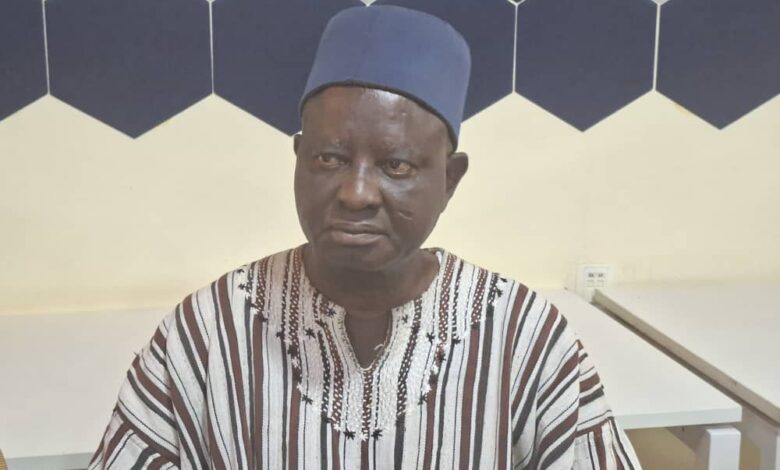
The Secretary to the Overlord of the Builsa Traditional Area, P. P. Apaabey Baba, has called for stronger conflict-management training in all programmes involving land use and irrigation, as rising pressure on land continues to trigger disputes across several communities in the Upper East Region.
Speaking on the sidelines of the 62nd Consultative Committee Meeting of the Irrigation Company of Upper Region (ICOUR) on Thursday, November 13, Baba noted that competition over land, especially for irrigation, commercial farming, and settlement, has become one of the major sources of tension among landowners, farmers, and neighbouring communities.
He stressed that land ownership, by custom and law, rests with landowners, who work through traditional authorities to make land available to investors. According to him, while traditional leadership facilitates access to land, state agencies and district assemblies are ultimately responsible for proper land administration.
“By law, the land belongs to landowners, which is very fundamental, which is one of the traditional strengths of every traditional area. And the landowners have a responsibility through the traditional authority to make land available to any prospective investor.”
“When it comes to that level, then the investors who are part of state-owned have a responsibility by the assembly to manage the land, to make land available, and the management goes to the institution.”
Baba explained that many land-related conflicts arise due to misunderstandings between farmers, irrigators, and community members, often because they receive little or no training on conflict prevention or structured reporting channels.
“Because of the hunger for land, for irrigation purposes conflicts can arise. And for us, as traditional authority, when conflicts arise, we have a responsibility to intervene.”
He said integrating conflict-management training into agricultural and irrigation support programmes would help reduce tensions and improve cooperation among stakeholders.
Baba recommended that farmer groups, agricultural extension officers, ICOUR field staff, and all actors involved in land and irrigation administration be equipped with basic conflict-management tools to help address issues before they escalate.
“They should introduce conflict-management strategy, such as Authentic Dispute Resolution. When this is introduced into the training programme, it will provide them with some negotiation skills.”
“When there’s a conflict they can negotiate, because the farmers have a right, the landowners have a right, so we need to have a central point where both of us will agree for our common existence, so that we can increase our productivity.” He added.
Mike 105.3FM | Navrongo | Alexander Bombande