Upper East seeks Korean investment in agriculture, technology and agro-processing
The Upper East Regional Coordinating Council is pursuing Korean investment and technical partnerships to modernise agriculture, revive dormant agro-industrial facilities and create jobs through technology transfer and skills development.

The Upper East Regional Coordinating Council is seeking strategic investment and technical partnerships with South Korean companies to transform agriculture, revive dormant agro-industrial facilities and create employment opportunities for the region’s growing youth population.
The proposed partnership, which forms part of efforts to accelerate the region’s development, is expected to introduce modern technologies in precision agriculture, drone operations, satellite remote sensing, water management and industrial processing.
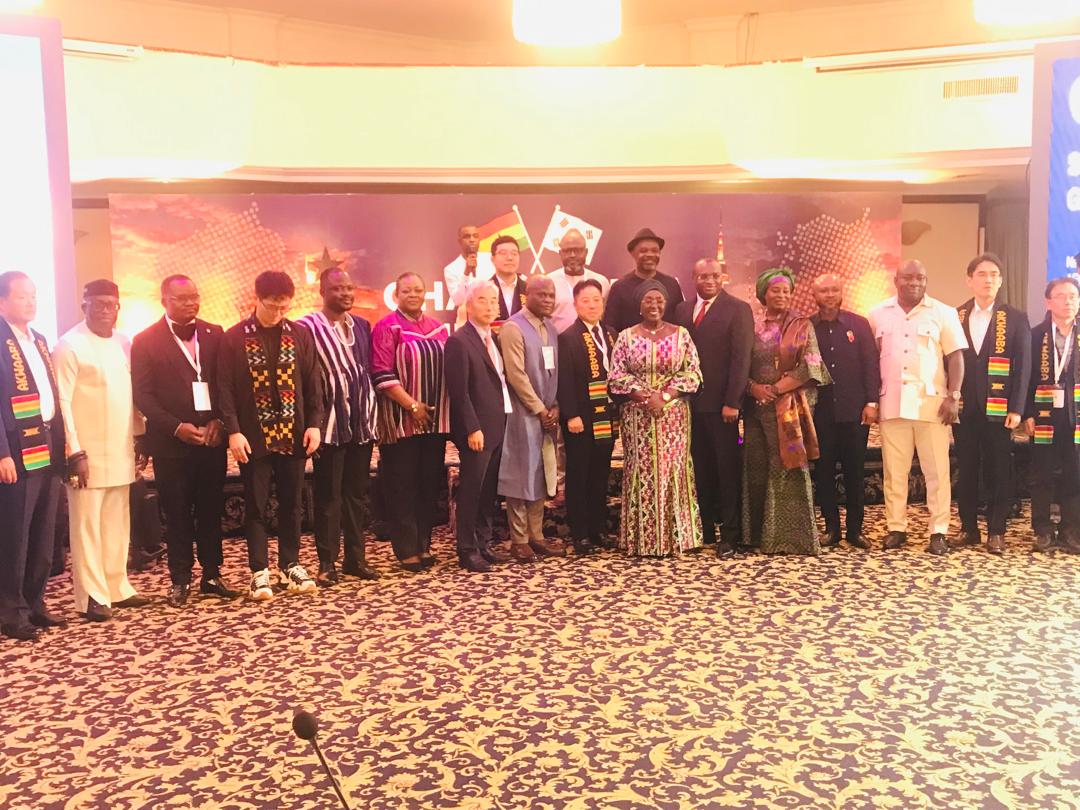
The initiative was outlined by Deputy Chief Executive Officer of the National Health Insurance Authority (NHIA) in charge of finance and investment, Anatu Anne Seidu Bogobiri Esq, who represented the Upper East Regional Minister, Donatus Akamugri Atanga at the Ghana–Korea Business Forum 2026 held at the La Palm Royal Beach Hotel in Accra on Thursday, November 5.
She said the Upper East Region was not only open to Korean investment but was ready to establish mutually beneficial partnerships capable of delivering sustainable development and long-term economic opportunities.
Bogobiri disclosed that the Regional Coordinating Council and A-Tech Group Korea had, over the past year, developed a framework for cooperation covering technology transfer, skills development, academic exchanges and the revival of agro-industrial facilities.
The proposed cooperation which has been consolidated into a Memorandum of Understanding (MoU) subject to approval by the relevant authorities, also involves Bolgatanga Technical University (BTU) and the University of Technology and Applied Sciences (UTAS) in Navrongo.
She said a key component of the arrangement was to introduce drone and satellite remote-sensing technology through the two universities to strengthen agricultural production and develop the technical capacity of young people in northern Ghana.
Under the proposed collaboration, Korean expertise in precision agriculture and drone technology is expected to help farmers identify crop diseases and pest infestations early, monitor farms, improve fertiliser application and respond more effectively to drought and flooding.
Bogobiri indicated that the Tono, Vea and Tamne irrigation schemes would be priority areas for the introduction of these technologies, particularly to improve dry-season farming and increase agricultural productivity.
She said the partnership also presented an opportunity to revive some of the region’s dormant agro-industrial facilities, including the Pwalugu Tomato Factory, Zuarungu Meat Factory, Pusu-Namongo Cotton Ginnery and Bolgatanga rice mills.
According to her, attracting Korean companies with expertise in industrial production and factory management could help restore these facilities to operation, promote local value addition, create jobs and improve incomes for farmers and other agricultural value-chain actors.
She further identified water treatment, efficient irrigation systems and geospatial mapping as other areas where Korean technology could address critical development challenges in the region.
On skills development, Bogobiri said the proposed partnership would provide opportunities for young people to acquire practical skills in drone operation and maintenance, Geographic Information Systems (GIS), satellite data analysis, cybersecurity and coding.
She stressed that building local technical capacity was essential to ensuring that the benefits of the partnership would be sustained beyond the initial investment phase.
The proposed collaboration is expected to align with the Upper East Region’s PEARL Framework 2026–2035, which stands for Prosperity through Enterprise, Agriculture and Regional Livelihoods.
The ten-year development framework, valued at GH¢8.6 billion, covers all 15 districts and municipalities, eight sectors and 23 flagship projects, providing a development roadmap for prospective investors and development partners.
Bogobiri said the region’s strategic location along Ghana’s north-eastern border, its agricultural potential, irrigation infrastructure, mineral resources and access to the Paga border corridor offered significant investment opportunities, including access to markets within the Sahel.
To translate the discussions into practical interventions, she proposed a pilot drone and precision-agriculture project at either the Vea or Tono irrigation scheme in the next farming season.
Other proposals include establishing a drone operation, maintenance and geospatial training centre at Bolgatanga Technical University, with UTAS as a partner, and introducing a community water-treatment demonstration project in at least one district.
She also called for a Korean business delegation to visit Bolgatanga to assess the region’s irrigation schemes and agro-industrial facilities, as well as the establishment of a joint working group involving the Regional Coordinating Council, A-Tech Group Korea and the two universities to translate the business discussions into concrete project agreements.
Bogobiri assured prospective investors of the Regional Coordinating Council’s commitment to providing a single point of contact to facilitate engagements with district assemblies, traditional authorities and relevant national agencies.
She added that the region was also establishing an independent PEARL Fund, with a Board of Trustees, citizens’ oversight committee and published accounts, to strengthen accountability in the mobilisation and management of development resources.
The Ghana–Korea Business Forum brought together Korean business leaders, technology partners, government officials and members of Ghana’s business community to explore investment and cooperation opportunities between the two countries.
Mike 105.3 FM I Navrongo | David Adapuna