Regional minister seeks NADMO support for water harvesting project to curb perennial flooding
Upper East Regional Minister Akamugri Donatus Atanga has appealed to NADMO to support a proposed water harvesting project that would divert excess water into storage ponds to reduce Bagre Dam-related flooding and support dry-season farming.
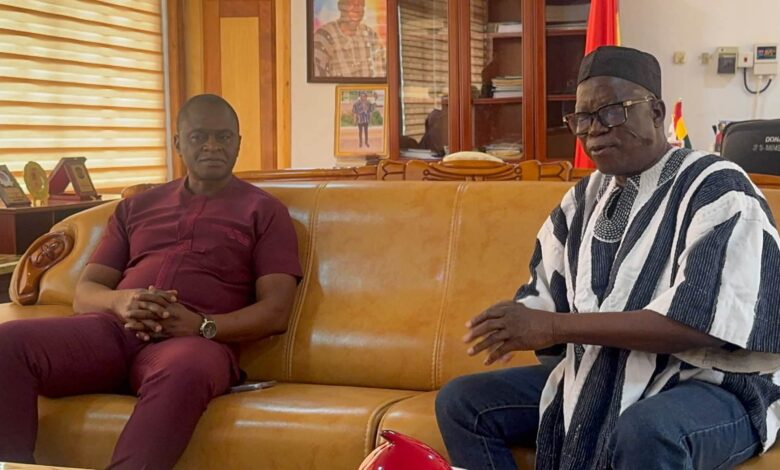
Upper East Regional Minister, Akamugri Donatus Atanga, has appealed to the National Disaster Management Organisation (NADMO) to support a proposed water harvesting project aimed at reducing the recurring impact of the Bagre Dam spillage and improving agricultural production in the region.
The proposed intervention involves constructing water collection ponds away from the banks of the White Volta and channelling excess water into them for storage and subsequent use during the dry season.
Akamugri made the appeal when the Director-General of NADMO, Major (Rtd) Dr Joseph Bikanyi Kuyon, paid a visit to the Upper East Regional Coordinating Council.
He said the region continued to experience annual flooding associated with the Bagre Dam spillage, making it necessary to explore sustainable measures to manage excess water rather than relying mainly on post-disaster interventions.
“When we talk about disasters in Ghana, everybody knows that the Upper East Region is disaster-prone because of the Bagre Dam. Perennially, we face this challenge every year,” he said.
According to the minister, the regional administration was exploring ways to harness water flowing from Burkina Faso into Ghana to make it beneficial to communities rather than allowing it to cause destruction.
He explained that the proposed project would involve developing dugouts at strategic locations away from the riverbanks and constructing channels to divert excess water into them.
The stored water would subsequently be used for livestock and irrigation during the dry season, while helping to reduce the destructive effects of flooding on communities and properties.
Atanga said the initiative formed part of the region’s 10-year development framework, known as PEARL, which seeks to address development challenges and unlock the region’s economic potential.
He called on the NADMO Director-General to help mobilise development partners and donors to support the implementation of the project.
The minister said successful implementation would not only reduce the region’s vulnerability to flooding but also increase food production and create employment opportunities for young people.
The Chief Director of the Upper East Regional Coordinating Council, Bless Kwame Darkey, also highlighted the importance of strengthening disaster preparedness, particularly as the region approaches the dry season, when bushfires and other fire-related emergencies become major concerns.
He said logistical constraints remained a challenge for NADMO’s regional and district operations, noting that the region often relied on a limited number of private companies for support during emergencies.
Darkey, however, expressed confidence in NADMO’s collaboration with the Regional Coordinating Council and Regional Security Council to respond to disasters.
Responding, Major (Rtd) Dr Kuyon said water harvesting was already among NADMO’s priority interventions, adding that the organisation was pursuing proposals submitted to development partners for support.
He said the construction of water reception ponds was a major component of the organisation’s plans to address situations where communities experienced excess water during certain periods and shortages during others.
“Water is supposed to be a blessing, not a curse,” he said, stressing the need for innovative measures to regulate water availability throughout the year.
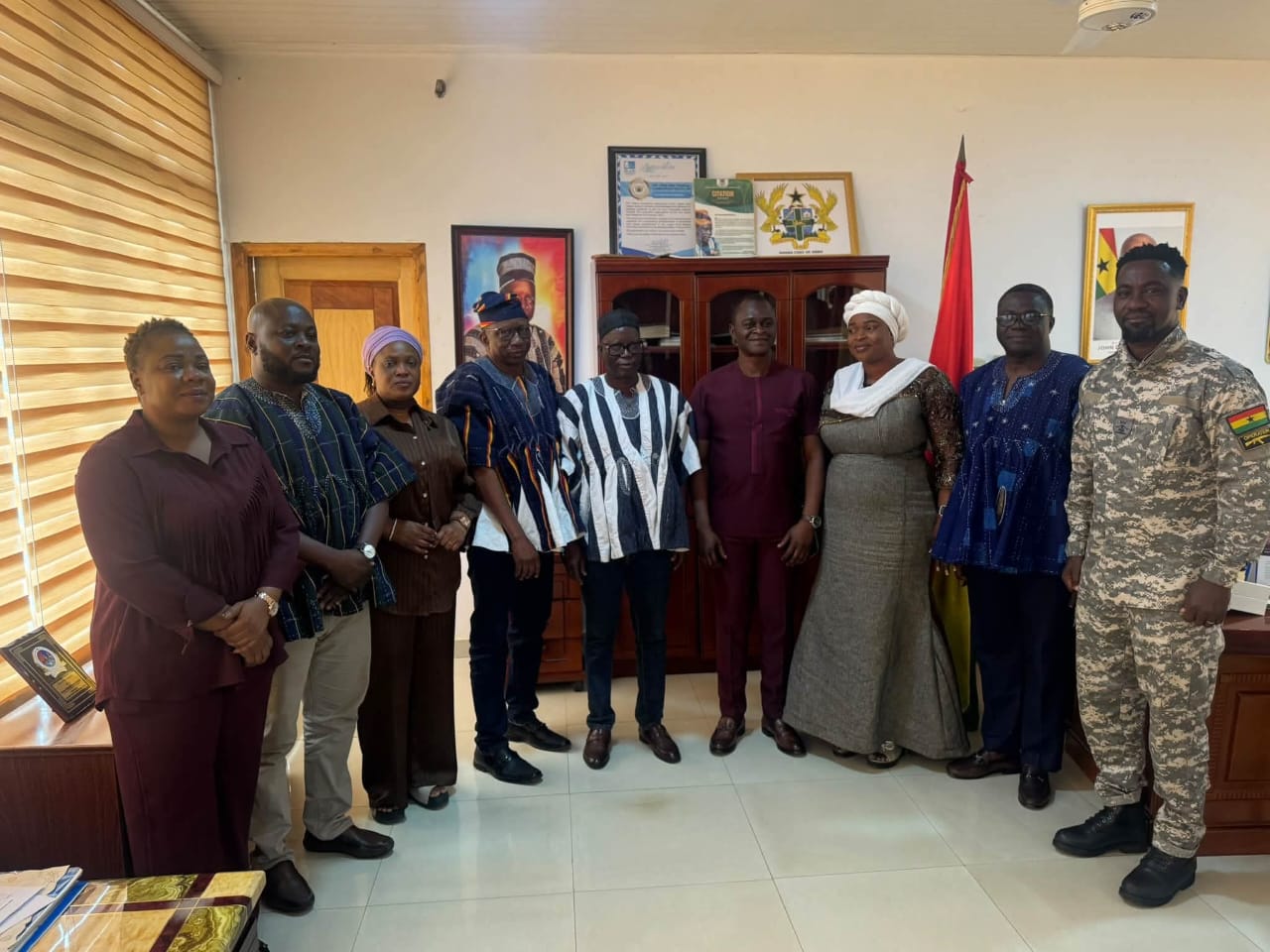
Dr Kuyon expressed optimism that some of the proposals submitted to donors would receive positive responses, indicating that the Upper East Region could be considered for an initial intervention.
He said the proposed project would also help address downstream water management challenges while allowing communities to benefit from the stored water.
The NADMO Director-General further disclosed that the organisation was planning to establish strategically located outfield warehouses across the country to improve emergency response and the distribution of relief supplies.
He said the proposed warehouses had been captured in NADMO’s budget, pending the necessary approvals, and would enable the organisation to decentralise its strategic stock from Accra.
According to him, locating emergency supplies closer to vulnerable communities would reduce response times and ensure that affected regions received assistance more quickly during disasters.
Mike 105.3FM | Navrongo | Castro Senyalah