EPA engages Kassena-Nankana residents ahead of January 2027 ban on expanded polystyrene foam products
EPA officials Priscilla Kuguriye and Francisca Ayagitam urge traders, food vendors and residents to switch to safer packaging alternatives ahead of the January 1, 2027, ban on expanded polystyrene foam products.
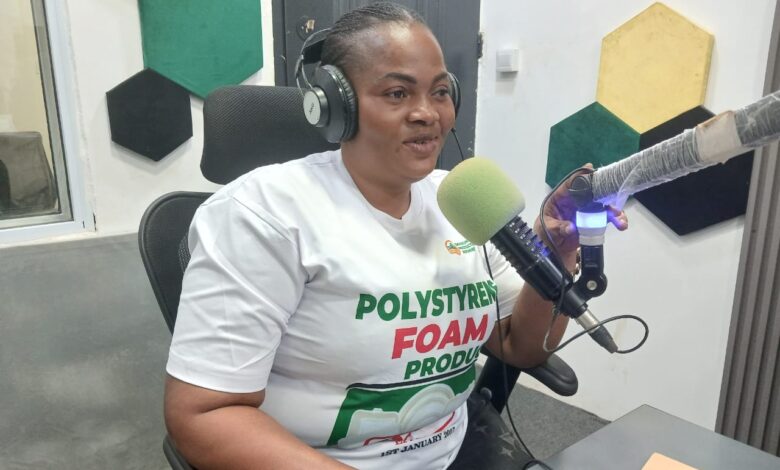
The Head of the Environmental Protection Authority (EPA) in the Kassena-Nankana Municipality, Priscilla Kuguriye, has urged food vendors, restaurant operators and residents in in the Kassena-Nankana area to stop using styrofoam takeaway packs, warning that the products pose significant environmental and potential health risks.
Speaking on the Big Mike Breakfast Show on Thursday October 15, Kuguriye said the Authority was intensifying public education ahead of the nationwide ban on expanded polystyrene foam products, scheduled to take effect on January 1, 2027.
She explained that the ban covers commonly used takeaway packs, including disposable bowls, cups, plates and foam containers used by chop bars, restaurants and food vendors.
It also extends to other expanded polystyrene foam products used in packaging and related applications, subject to the exemptions provided under the directive.
Kuguriye said styrofoam products posed a serious environmental threat because they do not readily decompose and can accumulate in the environment, obstruct drainage systems and contribute to flooding.
She added that discarded styrofoam could break down into smaller plastic particles, contributing to microplastic pollution in land and water bodies.
“It’s not just about the environment, but it has to do with our own health as well. So styrofoam is non-biodegradable. It breaks into microplastics that contaminate land and water bodies,” she said.
According to her, the products are also difficult and costly to recycle, making their continued use and disposal a challenge for effective waste management.
Kuguriye said the EPA’s directive prohibits the production, importation, distribution, sale and use of expanded polystyrene foam products covered by the ban.
She stressed that the measure was intended to protect public health and the environment rather than punish traders and food vendors who depend on takeaway packaging for their businesses.

Also speaking on the programme, Francisca Ayagitam, an EPA staff member, highlighted concerns about the potential health risks associated with using styrofoam containers for hot food and liquids.
She warned that exposure to high temperatures could cause certain chemicals in foam packaging to migrate into food, depending on the material and conditions of use.
“When you put hot soup inside the white takeaway pack, the heat makes the chemicals in the foam come into the food. That is dangerous for your health. It can cause cancers and affect our reproductive health,” she said.
Ayagitam further cited research indicating that styrene, a chemical used in the production of polystyrene, may pose health risks under certain exposure conditions. However, the level of risk depends on the extent and nature of exposure.
She urged women, particularly food vendors operating in Navrongo Market, to take an active role in promoting alternatives to styrofoam packaging.
Both EPA officials said the public education campaign would be extended to the Navrongo Central Market, lorry stations, schools and churches to ensure that traders, consumers and other stakeholders understood the implications of the ban and had time to prepare.
They urged businesses to begin identifying suitable alternatives before the December 31, 2026, transition deadline to minimise disruptions when enforcement begins.
The EPA is expected to collaborate with Municipal and District Assemblies, Customs and port authorities to enforce the ban from January 1, 2027.
According to the Authority, exemptions will apply to specified expanded polystyrene foam products intended for medical, laboratory and diagnostic purposes.
Mike 105.3 FM | Navrongo I Espenezer Webonga