Girls must be supported to lead and thrive, WaterAid Ghana urges stakeholders
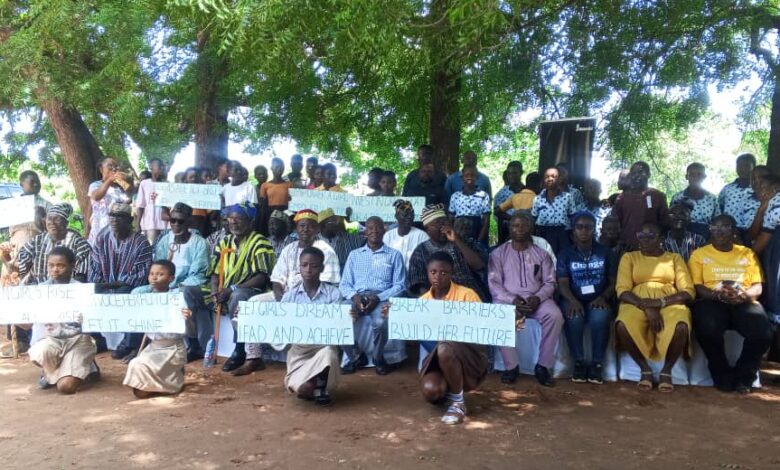
The organization joined students, teachers, traditional leaders, and parents at the Vunania Junior High School in the Kassena Nankana Municipality of the Upper East Region to commemorate this year’s International Day of the Girl Child.
WaterAid Ghana, a non-profit organization committed to ending the water, sanitation, and hygiene (WASH) crisis in the country, has called on stakeholders to support the girl child to lead and thrive.
The organization joined students, teachers, traditional leaders, and parents at the Vunania Junior High School in the Kassena Nankana Municipality of the Upper East Region to commemorate this year’s International Day of the Girl Child, observed annually on October 11.
Instituted by the United Nations in 2012, the day focuses on addressing the challenges girls face globally while promoting their empowerment and rights. This year’s celebration was held under the theme, “The Girl I Am, The Change I Lead: On the Frontline of Crisis.”
Speaking on behalf of the Country Director of WaterAid Ghana, the Advocacy, Campaigns and Inclusion Manager, Fauzia Aliu, said the organization is delighted to celebrate the resilience and leadership of girls.
“It is a call to recognize girls as leaders and change makers who are shaping their communities and future despite the many challenges they face.”
Aliu assured the girls of WaterAid Ghana’s continued support, emphasizing the organization’s focus on ensuring that every girl has access to clean water, sanitation, and hygiene facilities. She also urged parents to play their part in nurturing and protecting their daughters.
“Through SHARE projects and beyond, WaterAid Ghana will continue to work with partners and the government to strengthen WASH systems, promote menstrual hygiene and advocate for policies that will ensure no girl is left behind.” She stated.
The Kassena Nankana Municipal Director of Education, Kanlise Thomas, also addressed the gathering, highlighting the importance of education and equal opportunities for girls. He expressed concern over the low attendance of female learners, especially on market days and during the rainy season.
Pamela Adanwamba Buntugu, the School Health Education Program (SHEP) Coordinator for the Municipality, described teenage pregnancy as a major challenge affecting girls’ education. She attributed part of the problem to parental neglect and called on parents to guide their adolescent daughters through their growth process.
Representing the Navro Pio, Felix Kondayire reaffirmed the traditional authority’s commitment to safeguarding the welfare of girls in the area.
“Today we gather to recognize the value, strength, and potential of every girl and to renew our commitment to ensuring that no girl is left behind in education, health, or opportunity.”
“As a community, we have a duty to protect our daughters from all forms of harm, including early marriage and discrimination, and to support them to grow into confident and capable women who can lead and contribute meaningfully to society.”
Kondayire used the occasion to caution parents and traditional leaders that child marriage remains a taboo in the Navrongo Traditional Area, warning that anyone found engaging in the act will face the full rigours of the law.
Mike 105.3FM | Navrongo | Jerry Addah