IWMI Researcher urges integration of indigenous knowledge into white Volta groundwater monitoring
Mabel Kuma says combining community experiences with scientific data will strengthen groundwater monitoring and support sustainable water management in the White Volta Basin.
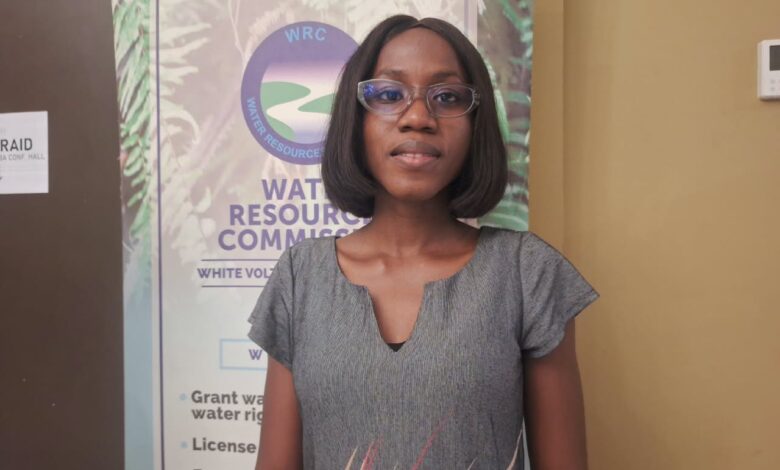
A Research Officer with the International Water Management Institute (IWMI), Mabel Kuma has called for the integration of indigenous knowledge into groundwater monitoring systems to improve water resource management and ensure the long-term sustainability of groundwater in the White Volta Basin.
Speaking on the development of a groundwater monitoring network for the basin, Kuma said combining scientific data with the knowledge and experiences of local communities could provide a more comprehensive understanding of groundwater conditions and inform effective management strategies.
She made the call following discussions on a groundwater monitoring framework being developed by the Water Resources Commission (WRC), with support from WaterAid, to strengthen the monitoring and management of groundwater resources in the basin.
Kuma commended the two organisations for the initiative, describing groundwater as an essential resource for communities whose domestic water needs and livelihoods depend on its availability.
She, however, observed that conventional groundwater monitoring systems often prioritise quantitative data, potentially overlooking valuable knowledge accumulated by communities through generations of interaction with their environment.
“Usually, when it comes to data collection, they talk about the quantitative aspect, where we miss out on the local knowledge, the indigenous knowledge that actually influences the groundwater monitoring system,” she explained.
Kuma, whose areas of expertise include water resource management, hydrology, geographic information systems (GIS) and spatial mapping, said local knowledge could complement scientific measurements by helping researchers understand the reasons behind observed changes in groundwater conditions.
She explained that community members often possess practical knowledge of local water sources and environmental changes, which could provide useful insights into the interpretation of data collected through formal monitoring activities.
She therefore advocated incorporating qualitative data collection into the groundwater monitoring framework to ensure that community experiences and observations were considered alongside scientific and technical evidence.
According to her, combining these approaches would give researchers a more complete understanding of groundwater systems and support more informed decisions on the sustainable use and protection of the resource.
She also commended the involvement of stakeholders from different professional backgrounds in developing the groundwater monitoring framework, saying their participation provided an opportunity to share expertise and collectively address water management challenges in the basin.
She noted that bringing together different perspectives was consistent with the principles of co-design and co-creation, which encourage stakeholders to develop solutions jointly using scientific evidence, professional expertise and community experiences.
She said such collaboration could strengthen the monitoring framework and ensure that it responded more effectively to the needs and realities of communities that depend on groundwater.
Beyond developing the monitoring network, Kuma stressed the need for a clear commitment to its long-term implementation and sustainability, warning against initiatives that generate recommendations without translating them into practical action.
Kuma’s remarks underscore the importance of maintaining stakeholder collaboration beyond the development stage to ensure that the knowledge and recommendations gathered contribute to effective groundwater management.
For communities that depend on groundwater for domestic water supply and their livelihoods, incorporating local knowledge could help ensure that management decisions reflect the realities of the people most directly affected.
She maintained that sustainable groundwater management requires a combination of scientific research, indigenous knowledge, meaningful community participation and sustained institutional commitment to protect the resource for present and future generations.
Mike 105.3 FM I Navrongo | Prosper Adankai